If you’ve ever worked in hydraulic or pneumatic system maintenance—whether you’re a seasoned equipment tech, a plant manager troubleshooting a lagging assembly line, or even a small-business owner running a fleet of delivery trucks—you’ve probably had a U-Cup seal fail on you when you least expected it. I’ve been supplying U-Cup seals for 12 years now, and one question comes up at least once a week, from new and returning customers alike: “Are your U-Cup seals resistant to abrasion?” It’s such a common question that it’s almost part of the first conversation we have with someone looking to replace worn seals or spec new ones for a high-wear application. Today, I’m breaking down what makes a U-Cup seal abrasion-resistant, where abrasion usually goes wrong, and what sets our seals apart from the ones you might have used before. U-Cup Seal

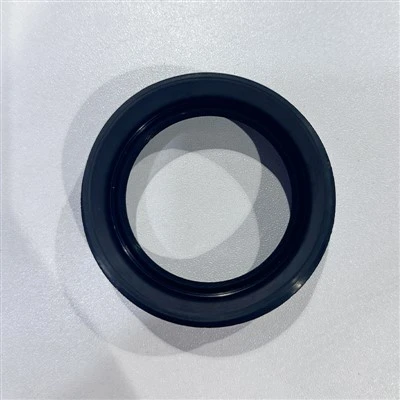
First, let’s get clear on what a U-Cup seal actually does, because their purpose is directly tied to their ability to handle abrasion. U-Cup seals are the donut-shaped, U-profile seals that sit in hydraulic or pneumatic cylinder glands, creating a tight barrier between the cylinder’s reciprocating rod and the barrel wall. When the rod moves back and forth, the seal presses against both the rod and the gland to contain fluid pressure, prevent leaks, and keep contaminants like dust, dirt, or metal shavings out of the system. That constant contact—pressing, sliding, moving, adjusting over thousands or millions of cycles—means abrasion is the number one enemy of any seal.
Abrasion in seal terms isn’t just one thing. There are two main types of abrasion we deal with in U-Cup seal applications, and they’re both avoidable with the right material and design. The first is adhesive abrasion, which happens when two surfaces (the seal and the rod, for example) stick together a little, then tear as they slide past each other. That’s different from abrasive abrasion, which is when hard particles trapped between the two surfaces scratch or grind away at the seal material. Both wear down the seal over time, turning what should be a multi-year component into something that needs replacement after a few months—or even weeks—in some cases.
Now, the biggest question: what makes a U-Cup seal abrasion-resistant? It’s not a single material, and it’s not just “thicker.” Over the years, I’ve seen every trick in the book when it comes to seal materials, and I can tell you that not all U-Cup seals are created equal. At our facility, we work with three core seal materials, each formulated specifically to handle different abrasion scenarios, and we never cut corners on material testing before we bring a new seal to our customers.
The first material is reinforced polyurethane. This is by far the most common material for abrasion-resistant U-Cup seals, and for good reason. Polyurethane is inherently tough—way more durable than rubber or nitrile (Buna-N) in most high-wear applications. But what makes our polyurethane U-Cups stand out is that we add tiny, uniform reinforcing fibers during the molding process, not just as a surface coating. A lot of cheap seal manufacturers will spray a thin layer of fiber or hardener on the outside of the seal, which wears off within a few hundred cycles. Our fibers are distributed evenly throughout the entire seal body, so even when the outer sliding surface gets scratched or worn, the inner layers still have the same abrasion resistance. That’s a game-changer for applications with constant sliding against the rod. For example, last year we supplied U-Cup seals to a mining company that uses hydraulic cylinders to move conveyor belts. Their old seals would wear through in three months because of the constant fine silica dust that got into the cylinder. Our reinforced polyurethane U-Cups lasted 18 months on average, because the fibers in the seal prevented the silica particles from grinding through the material.
The second material we use for extra heavy-duty abrasion applications is filled PTFE (polytetrafluoroethylene). Wait, I know what you’re thinking—PTFE is slippery, but is it abrasion-resistant? That’s a common misconception. Neat PTFE is soft and wears quickly, but when you fill it with things like glass fibers, carbon, or bronze, it becomes one of the most abrasion-resistant materials for seal applications. Filled PTFE U-Cups are perfect for applications where there’s extreme contamination, or where the seal is moving at high speeds—like in construction equipment that runs at 60 feet per minute, or in agricultural sprayers that have to deal with pesticides, fertilizers, and dirt. The filled PTFE doesn’t stick to the rod the way polyurethane does, so it reduces adhesive abrasion too. A customer in the farm equipment industry told me last year that switching from rubber U-Cups to our filled PTFE ones cut their seal replacement costs by 70% because they no longer had to stop harvest lines every few weeks to replace worn seals.
The third material we offer is our proprietary nitrile blend for moderate abrasion applications, where cost is a big factor. Now, nitrile is cheaper than polyurethane or PTFE, but a lot of people think it’s not abrasion-resistant. That’s true if you use standard Buna-N. But we formulated our nitrile blend with extra cross-linking during the vulcanization process, which makes it much harder and more resistant to scuffing. It’s not as tough as polyurethane, but for applications like small hydraulic lifts in warehouses, or pneumatic cylinders in packaging equipment that don’t see extreme contamination, it holds up twice as long as standard nitrile U-Cups. We make a point of telling customers not to use this blend in high-abrasion applications, but for the right use case, it’s a great option that doesn’t break the bank.
Beyond material, the design of the U-Cup seal itself plays a huge role in abrasion resistance. I’ve seen U-Cup seals that are made of great material, but have a thin, sharp lip that wears out almost instantly. That’s because the seal’s lip is the part that’s in constant contact with the rod—if it’s too narrow, too thin, or not curved properly, it can’t distribute the friction evenly. Our U-Cup seals have a tapered, rounded lip that’s designed to press evenly against the rod over the entire stroke, not just in one spot. That means wear is spread out over the entire lip, not just a small section that gets ground down every time the cylinder moves. We also add a slight undercut to the seal body, which allows a tiny bit of fluid to get between the seal and the rod during operation—this acts as a lubricant, reducing friction and abrasive wear. A lot of manufacturers skip the undercut to save material costs, but it’s one of the most important design features for long seal life.
Now, let’s talk about where abrasion usually fails, because even the best U-Cup seal will wear out prematurely if it’s not installed or used correctly. I’ve had customers call me saying their new seals are wearing out in two weeks, and it’s almost never the seal’s fault. The number one cause of premature abrasion in U-Cup seals is contamination in the system. If metal shavings from cylinder machining, dirt that got into the hydraulic fluid during a fluid change, or even fine dust from the work environment gets between the seal and the rod, those hard particles will act like sandpaper, grinding through the seal material in no time. That’s why we always recommend adding a wiper seal alongside the U-Cup seal—wipers are designed to keep contaminants out of the cylinder, so they prevent that abrasive wear before it even starts. A lot of customers think adding a wiper is an extra cost, but I always point out that a $2 wiper will save you hundreds in replacement seals and downtime.
Another common mistake is rod finish. The surface of the cylinder rod has a huge impact on seal abrasion resistance. If the rod is poorly finished—too rough, with deep scratches or pits—those imperfections will catch on the seal’s lip and cause adhesive abrasion. We always advise customers to check their rod finish before installing new U-Cup seals: ideal rod surface roughness is between 0.2 and 0.5 micrometers Ra. If it’s rougher than that, you can either refinish the rod or use a harder seal material that can handle the roughness. I had a customer in the automotive industry a couple of years ago who tried to install our standard polyurethane U-Cups on a rod that had a 1.2 micrometer Ra finish. The seals wore through in a week, but when we recommended our filled PTFE seals, which are harder and more resistant to scratching from rough rods, they lasted three months. That’s a perfect example of how material selection, not just abrasion resistance, needs to match the application conditions.
We also test every batch of our U-Cup seals for abrasion resistance before they leave our facility. We use a standard rotary abrasion test that simulates thousands of cycles of sliding contact, measuring how much material wears off the seal over a set number of cycles. Our polyurethane seals lose less than 10 milligrams of material after 100,000 cycles, and our filled PTFE seals lose less than 5 milligrams—way below the industry average of 25 milligrams for comparable seals. We share those test results with every customer who asks, because we want you to know exactly what you’re getting when you order from us.
I’ve been doing this long enough to know that a lot of seal suppliers will tell you their seals are “100% abrasion-resistant,” but that’s impossible. No seal is indestructible. The real question is, are our U-Cup seals abrasion-resistant enough for your application? For most of the hydraulic and pneumatic systems we work with—mining, agriculture, construction, manufacturing, even aerospace and medical equipment—they hold up far longer than standard seals, reducing downtime and replacement costs.
If you’re tired of replacing U-Cup seals every few months, if you’re dealing with leaks that are costing you money in fluid or lost production, or if you just want to spec seals that will stand up to the harsh conditions your equipment works in, I can help. We offer custom sizes for almost every cylinder on the market, and we can help you pick the right material and design for your specific application, whether you need seals for a small packaging machine or a 100-ton mining excavator. Don’t wait for another seal failure to bring your operation to a stop—reach out to our team today to discuss your U-Cup seal needs and find a solution that will last.
Exposed Skeleton Oil Seal References
- Bahadur, S. (2000). The development of fillered polymer composites for extreme wear applications. Wear, 245(1-2), 92-105.
- Strom, H., & Larsson, M. (2015). Seal wear in hydraulic cylinders: A literature review. Tribology International, 85, 116-125.
- ASTM International. (2017). Standard Test Method for Abrasion Resistance of Rubber Vulcanized Thermoplastic Elastomers (Rotary Platform, Double Head Abrasion Test). ASTM D5963-17.
- Lewis, P. R., & Gough, R. W. (2008). Hydraulic Seal Design and Application: A Practical Guide. Industrial Press Inc.
Jinhua Haobo Sealing Technology Co., Ltd.
As one of the most professional u-cup seal manufacturers and suppliers in China, we’re featured by quality products and good price. Please rest assured to buy customized u-cup seal made in China here from our factory. For pricelist, contact us now.
Address: No.89, Hucheng Street, Tangxi Town, Wucheng District, Jinhua City, Zhejiang Province
E-mail: 245149293@qq.com
WebSite: https://www.haoboseal.com/
