Hey there, let’s cut to the chase because if you’re here, you’re probably tired of scrolling through generic industry blogs that throw around jargon like it’s going out of style and never answer the actual questions you have. If you work in manufacturing, logistics, agriculture, or even construction, you’ve definitely dealt with weigh modules—those little game-changer kits that turn regular tanks, hoppers, or conveyors into precise weighing systems, right? And the big one I get asked constantly (like, at trade shows, over Slack DMs, and even random times on my personal cell—don’t get me started) is: what’s the actual minimum weight capacity of a weigh module kit? Weigh Module Kits
First off, let’s make one thing clear: there’s no one-size-fits-all number here. If you’re looking for a hard-and-fast answer, this isn’t the blog for you. But that’s not a cop-out—this is engineering 101. The minimum weight capacity of a weigh module kit doesn’t just pull out of thin air; it depends on a bunch of factors that actually matter for your specific setup. I’m Jake, by the way—owner of the weigh module company you’re probably seeing referenced here, and I’ve been geeking out over load cells and weighing systems for 12 years. I’ve installed kits for a 2-gallon chemical mixing tank at a small craft brewery, and a 10,000-gallon grain hopper at a family farm in Iowa. If I’ve learned anything, it’s that “minimum capacity” is a conversation, not a stat you can Google in 10 seconds.
Let’s start with the basics that everyone should know: a weigh module kit’s minimum capacity isn’t the smallest weight it can measure. Wait, that’s a huge mistake people make, okay? Like, if a kit says it has a 10-pound minimum, that doesn’t mean it can only weigh 10 pounds. It means that’s the lowest weight where you can expect accurate, repeatable readings without weird errors from vibration, side load, or that wobbly tank base you’ve been ignoring. Load cells— the heart of every weigh module—are sensitive little guys. If you try to weigh a single ounce on a kit rated for 10 pounds, you’re going to get random numbers, maybe a blinking error light, and you’ll end up blaming the kit when it’s just not the right fit.
Now, let’s talk about the actual numbers. Most standard general-purpose weigh module kits you’ll find for small to medium setups (like lab scales, small mixing tanks, or conveyor feeding systems) have a minimum capacity of around 5 to 20 pounds. Wait, 5? Yeah, we make a super compact kit for those benchtop tanks used in specialty food production—like for making artisanal sauces or craft syrups. It uses a mini load cell, has a 5-pound minimum, and maxes out at 100 pounds. But here’s the catch: that 5-pound minimum isn’t magic. It only works if you’ve got a solid, level mount, no side stress (like someone jostling the tank), and you’re not mixing anything that’s sloshing around so much it’s pushing on the sides instead of weighing down the load cell.
But if you’re working with heavier stuff—like bulk materials, large storage tanks, or industrial conveyors—those minimums go up. A lot. A common kit for 1,000-gallon water tanks or aggregate hoppers might have a minimum capacity of 50 to 100 pounds. Why? Because those systems are big, the structures aren’t perfectly rigid, and you’ve got to account for things like the weight of the tank itself, right? Wait, that’s another thing I see people mess up: they forget to subtract the tare weight of the vessel. If your tank weighs 300 pounds empty, and you want to weigh 50 pounds of material, you’re not measuring 50 pounds—you’re measuring 350 pounds. So your minimum capacity has to be higher than the material weight, not just the stuff you’re adding. That’s a rookie move, and it’s why so many people end up with inaccurate readings.
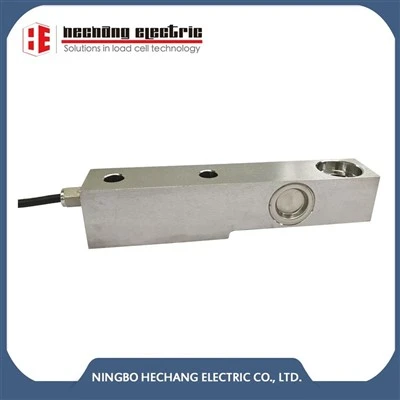
Now, let’s get into the nitty-gritty factors that change this minimum, because this is where the real science lives, not the marketing fluff. First: load cell type. There are four main types of load cells for weigh modules, and each has different minimums. Miniature load cells (like the ones I mentioned for small benchtop kits) can hit as low as 2 pounds, but they’re fragile—can’t handle heavy side load, no good for outdoor use. S-beam load cells are super popular for mid-sized kits; their minimums start around 10 pounds, max out up to 10,000 pounds, and they’re way more durable for factory floors. Compression load cells, the ones used for big tank and hopper kits, have minimums that usually start at 50 pounds, because they’re built to handle heavy static loads, not tiny, dynamic ones. Then there’s pin load cells, used for cranes and large conveyors—those minimums are like 1,000 pounds, which makes sense because you’re not weighing tiny stuff with a crane.
Second factor: application type. Are you using this kit for static weighing (like a tank that just sits there holding material) or dynamic (like a conveyor that’s moving product)? Static is way easier for low minimums, because no movement = no vibration messing with the readings. Dynamic? Even if you have a 5-pound capacity load cell, the minimum for a dynamic kit might jump to 20 or 30 pounds because of that constant movement, which causes what’s called “noise” in the load cell signal. I had a customer a few years back who tried to use our tiny benchtop kit on a conveyor feeding coffee beans, and he couldn’t figure out why his readings were all over the place. Turns out the conveyor vibration was adding enough force to the load cell that it couldn’t pick up weights lower than 25 pounds. Once he switched to an S-beam dynamic kit, which had a 20-pound minimum, it worked perfectly.
Third: installation quality. Oh man, this is the biggest wild card. Even the best weigh module kit in the world is useless if you install it wrong. If your mount is crooked, if there’s debris under the module that’s keeping it from sitting flat, or if the pipes connected to your tank are pulling or pushing on it (that’s called side load), your minimum capacity is going to be way higher than the kit’s rated number. I had a farm client last year who installed a 50-pound minimum hopper kit, but he didn’t disconnect the drain line from his main storage tank before mounting the new hopper. That line was pulling the hopper to the side, so he could only accurately weigh stuff over 200 pounds—four times the rated minimum. He had to call us out to fix the install, and once we aligned the modules and disconnected the drain, it dropped right back down to that 50-pound minimum, like it was supposed to. Side load is a killer, y’all.
Now, let’s talk about edge cases, because I know you’re gonna ask. What if you need to weigh something really tiny, like 2 ounces? Are there any options? Sure, but those are specialty kits, not the standard ones most people buy. We make a custom ultra-mini weigh module kit for lab scale applications, with a 2-ounce minimum, but it’s super sensitive—can’t handle any impact, can’t be used outdoors, and it’s way more expensive than a standard kit. Another edge case: what if you have a non-standard application, like weighing a portable bin that moves around a lot? We did a custom kit for a local produce distributor that had a 30-pound minimum, even though their bins only held 15 pounds of lettuce, because the bins got moved around with a forklift, which adds vibration and side force.
Wait, let’s clear up another myth. A lot of people think “minimum capacity” is a hard stop—like if you weigh anything below it, the load cell breaks. No, that’s not right. The load cell will still give a reading, but it’s just not accurate, which is the whole point of using a weigh module in the first place. You don’t buy a weigh module to get random numbers; you buy it to know exactly how much product you have, how much you’re mixing, how much you’re shipping. So going below the minimum doesn’t break it—it just makes it useless for your needs. That’s a huge difference, and I can’t tell you how many customers I’ve talked to who thought they ruined a $500 kit because they weighed a tiny sample, when really they just needed a smaller, more precise kit.
Now, let’s get to the part that matters most for you: how to find the right minimum capacity for your setup, not just what’s printed on a box. First, do the math. Add up two numbers: the tare weight of your vessel (that’s the empty tank, hopper, or bin) plus the minimum material weight you need to accurately measure. If you have a 20-pound empty tank and you need to accurately weigh 5 pounds of material, that’s a total minimum required of 25 pounds—so you don’t need a 5-pound minimum kit, you need a 25-pound one, because that’s the total load. That’s another mistake: forgetting tare weight. I see it all the time.
Second, test your application’s unique factors. If you’ve got a vibrating conveyor, subtract that 10-20 pounds from your available minimum, because vibration will throw off readings. If you’re mounting to a flimsy metal stand, not a concrete base, you’ll need a higher minimum to account for the flex in the stand. If your setup is exposed to weather or dust, you might need a kit with a higher minimum, because sealing the load cell adds a tiny bit of friction that can skew low readings.
Third, talk to someone who actually works with these kits, not a sales rep who’s just reading a script. Like, right here, if you’re reading this. I don’t do high-pressure sales tactics; I tell you straight up if our kit isn’t right for you. Last month, a guy emailed me asking for a kit with a 1-pound minimum for a small lab tank. Our smallest standard kit is 5 pounds, so I didn’t push it— I told him about our custom ultra-mini kit, explained the cost, the limitations, and even helped him figure out if the custom kit was worth it for his project. That’s way better than selling him a $200 kit that would have been useless because he didn’t know what he needed.
Wait, let’s throw in a real example to make this concrete. A local craft brewery hit us up a few months back. They had a 5-gallon mash tun, and they needed to weigh the grain before they added water to make beer. They told me they needed a minimum capacity of 1 pound, because they were testing small batches with 2 pounds of grain (plus the empty tun, which weighed 8 pounds). Wait, so total minimum load is 10 pounds, right? I told them our standard 10-pound minimum S-beam kit would work perfectly, even for their small test batches. They were relieved, because they thought they needed a super expensive custom kit. We installed it, and their readings are accurate to within 0.1 pounds, even on their 2-pound test batches. That’s exactly how this works: the minimum capacity is about total load, not just the material weight.
Now, let’s wrap this up, because I know you’re probably scrolling to the bottom to find how to talk to us, but first, let’s recap what we covered today, because I know you’ve got a million tabs open and you’re gonna forget half of this. No, there’s no universal minimum weight capacity for weigh module kits. Most standard general-purpose kits are 5 to 20 pounds minimum for small, static setups, 50 to 100 pounds for mid-sized industrial setups, and 500+ pounds for heavy-duty or dynamic setups. But that’s just a starting point. The actual right minimum for your project depends on load cell type, whether it’s static or dynamic, how well you install it, and the tare weight of your vessel. And for the love of all things accurate, don’t confuse “minimum capacity” with “smallest weight it can measure” — accuracy is the whole point.
If you’re still not sure, that’s totally fine. We work with everyone from small startup shops to big Fortune 500 manufacturing plants, and we can walk you through figuring out exactly what you need, no pressure, no fine print, no jargon that makes your eyes glaze over. Just reach out, tell me about your project, what you’re weighing, where it’s mounted, how it’s used, and I’ll give you the straight scoop on whether our kits are a good fit, or if you need something custom.
Now, don’t ghost me. I know you’ve got another meeting or another task waiting, but this weigh module stuff is what I do, and I’d rather help you get the right kit the first time than have you deal with inaccurate readings or a kit that’s too big for your needs.
Compression Sensors References:
- National Institute of Standards and Technology (NIST). (2020). Handbook 44: Specifications, Tolerances, and Other Technical Requirements for Weighing and Measuring Devices. U.S. Department of Commerce.
- Load Cell Central. (2022). “Choosing the Right Load Cell: Minimum Capacity, Accuracy, and Application Considerations.” Industry Technical Guide.
- International Society of Automation (ISA). (2021). “Weigh Module Installation Best Practices for Industrial Process Systems.” ISA Standards Practice.
- USDA Agricultural Marketing Service. (2023). “Weighing Equipment Specifications for Agricultural Storage and Processing.” Technical Bulletin.
Ningbo Hechang Electric Co., Ltd.
As one of the most professional weigh module kits manufacturers and suppliers in China, we also support customized service. We warmly welcome you to buy advanced weigh module kits for sale here from our factory. If you have any enquiry about cooperation, please feel free to email us.
Address: No.66 Yongmao West Road, Ningbo, China
E-mail: info@hcesensor.com
WebSite: https://www.hechangsensor.com/
