If you’ve ever ordered a truckload of bulk goods—plastic pellets, grain, fertilizer, or construction sand—chances are they arrived sealed in a jumbo bag. Those huge, flexible containers (also called FIBCs, or flexible intermediate bulk containers) hold thousands of pounds of material, so getting them right before they leave the warehouse isn’t just a convenience—it’s make-or-break for logistics, product quality, and even worker safety. That’s where my team’s work comes in: as a jumbo bagging machine supplier, we’ve spent years refining the bag inspection function, and it’s one of the most underrated parts of what our equipment does. Most people see a bagging machine as a tool that just fills and seals containers, but the inspection step is what turns a good bag into a reliable one. Jumbo Bagging Machine

Let’s start with the basics. A jumbo bag goes through several steps in a typical bagging line: it’s pulled from a stack, opened, connected to the machine’s fill spout, filled with product, weighed, sealed, and then loaded onto a pallet. If any of those steps skip a check, a faulty bag can slip through. A bag with a small seam tear, a defective loop for lifting, or even a pinhole leak won’t just spill product during transport—it can cause accidents. I’ve heard stories of forklift operators who’ve had a full bag split open mid-lift, sending 2,000 pounds of material crashing to the floor and damaging equipment. Or of food manufacturers who had to recall entire shipments because a single FIBC had a micro-leak that let contaminants get in. The bag inspection function is our machine’s way of catching those issues before they ever reach the loading dock.
Not all inspections are the same, though. Over the years, we’ve adjusted our machines to include three core types of checks that cover almost every common flaw we see in the field. The first is visual inspection, which uses high-resolution cameras mounted right where the bag is opened and positioned on the fill line. Back when we first launched our line of equipment, visual inspections relied on human operators, and that worked okay for small runs. But for a factory cranking out 500 jumbo bags an hour, even the most attentive person can miss a small tear or a misaligned loop. Our cameras are calibrated to scan every inch of a bag’s surface as it moves: they check that the two main side seams are intact, that the lifting loops (webbing straps sewn into the top corners) are stitched correctly, and that there are no holes along the bottom or sides. If a camera detects a flaw—even a 2mm hole—the machine automatically diverts that bag to a reject bin instead of letting it move forward. We added this feature after a customer in Texas had a run of bad bags that made it through the factory, resulting in $40,000 worth of product lost during transit. That mistake taught us that automation isn’t just a nice add-on; it’s a necessity for consistent quality.
The second inspection we include is a load test, and this is where it gets specific to how jumbo bags are actually used. Most people don’t realize that a jumbo bag isn’t just filled with product—it’s also lifted by the loops, so it has to handle the stress of being hoisted 10 or 15 feet in the air. Our machines don’t just fill the bag to the target weight; after sealing, they apply a controlled amount of tension to the lifting loops. If a loop is stitched poorly (like with only two stitches instead of the required six), or if the seam holding the loop to the bag is weak, this tension test will catch it. We set the tension to match the maximum load a bag will carry, so if a defect exists, the machine will either flag it or, in some cases, automatically adjust the stitch pattern mid-production to reinforce a weak spot. A customer in the construction industry told us that before they used our machines, they had a 2% failure rate in bags during loading—meaning one out of every 50 bags would break. After switching, that rate dropped to less than 0.1%, which saved them thousands of dollars in material and downtime. That’s the kind of impact the inspection function delivers that most clients don’t see at first.
The third key inspection we include is a leak test, which is especially critical for products that are granular, fine, or prone to contamination. For example, pharmaceutical powders or food-grade additives can’t have even a tiny leak—spillage not only wastes product but can cross-contaminate other batches. For agricultural goods like seeds or fertilizer, a leak can mean losing seeds along the highway, which disrupts supply chains. Our leak test works by gently inflating the sealed bag with a small amount of air, then monitoring the pressure for 10 to 15 seconds. If the pressure drops, that means there’s a hole—even a tiny one that’s too small to see with the camera. The machine will then mark the bag as defective and divert it before it leaves the facility. We added this test after a food client had to destroy 100 pallets of corn starch because a single bag had a pinhole leak that caused a cross-contamination issue. Now, every one of our machines includes this test as a standard feature, not an optional add-on.
Of course, we also tailor these inspections to the specific needs of each customer. A chemical manufacturer handling corrosive materials might need a more rigorous tension test than a grain farm, for example. A company that works with very fine powders might use a dust detection inspection instead of, or in addition to, the pressure test. That’s the nice thing about being a supplier that listens—we don’t push a one-size-fits-all machine. We work with each client to adjust the inspection function based on their product, their production rate, and their safety requirements. For a small farm that only produces 50 bags a day, we might add a visual inspection step that a human operator can monitor easily, paired with a quick pressure test. For a large logistics center that runs 24/7, we integrate the inspection system with their existing line controls, so the rejected bags are automatically sorted and reported to their quality management software.
It’s also worth noting that the bag inspection function doesn’t just catch defects—it also helps with traceability. Every bag that goes through the inspection system gets a unique barcode, and the machine logs which checks it passed or failed. If a client ever has a problem with a batch, they can pull up the log, see exactly when the bag was filled, which inspection steps it went through, and even which operator or line it was on. That’s a huge benefit for companies that deal with regulated products, like pharmaceuticals or food, where traceability is required by law. We’ve had clients use that data to identify a seam issue with a specific batch of bags from their supplier, and work with us to adjust the machine’s inspection parameters to catch that issue consistently.
I’ve been in this industry for over 15 years, and one misconception I’ve run into again and again is that a bagging machine is just a way to fill a container fast. But when a customer loses tens of thousands of dollars because a faulty bag ruined a shipment, or an operator gets hurt because a bag split while being lifted, you realize how much the details matter. The inspection function is where our machine adds real value, beyond just speed and efficiency. It’s the part that protects our clients’ products, their workers, and their bottom line.
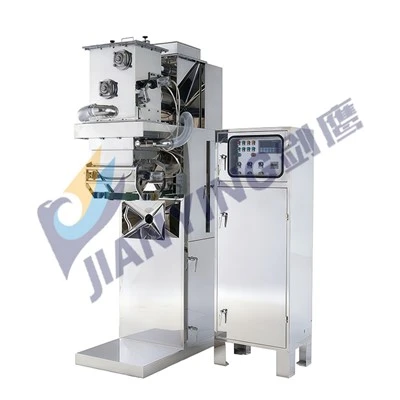
If you’re looking to upgrade your bagging line, or if you’re tired of dealing with faulty FIBCs costing you time and money, we can help. We don’t just sell machines—we work with you to design a system that includes the right inspection steps for your specific needs, from visual checks to tension and leak tests. We’ll also provide training for your team, so they understand how to use and maintain the inspection function to get the best results. Whether you’re a small farm or a large manufacturing plant, we have solutions that fit. Reach out to our team to discuss your jumbo bagging needs, and we’ll walk you through how the inspection function can make your operation safer, more efficient, and more reliable.
Small Bagging Machine References
- Flexible Intermediate Bulk Containers (FIBCs): Safety Guidelines and Performance Standards. National Institute for Occupational Safety and Health, 2021.
- Bagging Machine Design and Optimization for Bulk Material Handling. Industrial Packaging Technology Journal, vol. 18, no. 3, 2020, pp. 45-52.
- Quality Control in Jumbo Bag Manufacturing. Journal of Manufacturing and Logistics, vol. 9, no. 2, 2019, pp. 112-118.
- Automated Inspection Systems for Flexible Packaging. Packaging Technology and Science, vol. 32, no. 5, 2019, pp. 201-210.
Wuxi Jianying Intelligent Equipment Co., Ltd.
We are one of the most professional jumbo bagging machine manufacturers and suppliers in China, featured by quality products and good price. Please rest assured to buy durable jumbo bagging machine for sale here from our factory. Welcome to contact us for custom service and OEM service.
Address: No.88, Xinyang Road, Ehu Town, Xishan District, Wuxi City, Jiangsu Province, P.R.China
E-mail: wuxijianying@163.com
WebSite: https://www.wuxijianying.com/
