If you’ve ever stood next to a pressure vessel—whether it’s the tank storing liquid natural gas at a refinery, the reactor holding chemical compounds during manufacturing, or the tank compressing hydrogen for fuel production—you’re looking at equipment that does not have room for error. For the past 12 years, I’ve been in the pressure vessel steel supply business, and I can’t tell you how many times clients have called me panicking because they got steel from a vendor that didn’t meet basic QC standards. The steel that goes into a pressure vessel isn’t just metal; it’s the backbone of equipment that operates at hundreds of degrees, thousands of pounds per square inch of pressure, and often in harsh, corrosive environments. So today, I want to walk you through exactly what the quality control (QC) requirements for this steel are—not just the industry jargon, but the real-world checks we do every day at our facility to make sure our steel holds up when it matters most. Pressure Vessel Steel
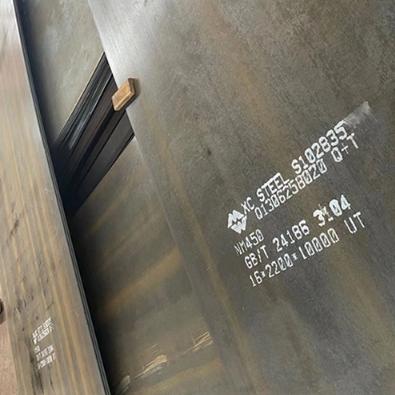
First, let’s start with the foundation: material composition. Pressure vessel steel can’t be a one-size-fits-all product. It’s usually low-alloy carbon steel, or sometimes high-alloy steel for extreme conditions, but the exact mix of elements has to hit very tight specs. Carbon content is the big one here. If carbon is too low, the steel won’t have enough strength to hold pressure. If it’s too high, the steel becomes brittle, especially when it’s exposed to cold temperatures or high stress. For most standard pressure vessel applications, the maximum carbon content hovers around 0.25%, but some specialized grades require it to be even lower, like 0.18%, to improve weldability. We also test for alloying elements like manganese, chromium, molybdenum, and nickel, each with a specific role. Manganese boosts strength without hurting ductility, while molybdenum prevents a condition called temper embrittlement, which can make the steel shatter when heated and cooled repeatedly. Nickel improves low-temperature toughness, so if your pressure vessel is going to be used in a cold climate, nickel content has to be carefully controlled. At our facility, every batch of steel gets tested with a portable optical emission spectrometer before it even leaves the mill. We run three separate tests per coil or plate to make sure there’s no variation from the specified composition—one on the edge, one in the middle, and one near the end, because some mills have slight variations in material across a single heat. If any test is off by even 0.01% in carbon or 0.05% in molybdenum, we reject that batch immediately. I learned this lesson early on, 10 years ago, when we tried to cut costs by taking a batch that was slightly over the carbon limit. It went into a pressure vessel that was being used for a chemical plant in Ohio, and within two years, there was a small crack in the weld area. That cost our client $200,000 in downtime, and we lost their business. We never took a shortcut on composition again.
Next up is dimensional accuracy and surface quality. This might sound trivial, but a pressure vessel that’s built from a plate that’s too thin, too warped, or has surface flaws is a ticking time bomb. Let’s start with thickness. A pressure vessel’s wall thickness is calculated based on the pressure it will hold, the material it’s made of, and the code it has to comply with (more on codes in a minute). For example, a tank holding 300 psi of gas at 500 degrees Fahrenheit needs a certain thickness, and if the steel plate is 1/32 of an inch thinner than specified, it can’t handle that pressure. We measure thickness at 10 different points on every plate: four corners, the midpoint of each side, and two points along the center. If any measurement is under the required thickness, that plate is scrapped. We also check for flatness. Warped plates are almost impossible to form into a cylinder or dome without creating stress points. We use a laser straightedge to make sure the plate doesn’t deviate more than 1/8 of an inch over a 10-foot length. For surface quality, we inspect every plate for cracks, seams, inclusions, or scabs. Surface flaws might look small, but they act like stress raisers—places where pressure concentrates, leading to cracks over time. We do a visual inspection first, but we also use magnetic particle testing for ferritic steels and ultrasonic testing to find hidden flaws just below the surface. Last year, we had a client from the aerospace industry order a batch of high-alloy steel for a hydrogen storage tank. One of the plates had a 2mm deep inclusion just under the surface. If we’d shipped it, when they welded the tank, that inclusion would have become a crack, and the tank would have failed during hydrotesting. It took two extra hours to find it, but it saved our client from a disaster, and they’ve been a repeat customer ever since.
Then there’s mechanical property testing. This is where we actually make sure the steel can do what it’s supposed to do: handle pressure, resist breaking, and stay tough under stress. The two main tests here are tensile testing and impact testing. Tensile testing measures how much stress the steel can take before it breaks, and how much it stretches before breaking. We take a small sample from each heat of steel, machine it into a standard shape, and pull it apart in a hydraulic testing machine. We record the ultimate tensile strength (the maximum stress it can handle) and the yield strength (the stress where it starts to deform permanently). For pressure vessel steel, the yield strength is usually specified between 30,000 and 50,000 psi, depending on the grade. If the yield strength is too low, the steel will deform under operating pressure, which weakens the vessel. If it’s too high, it might be too brittle. Impact testing is just as important, especially for steels that will be used in cold temperatures. We use a Charpy V-notch test, where we take a small sample of steel, notch it, and hit it with a heavy pendulum at a specific temperature. We measure how much energy it takes to break the sample. If the energy is too low, the steel is brittle and will shatter when it’s hit with stress, which is exactly what happened in a few pressure vessel failures in the 1950s that led to stricter codes. For example, a steel grade used for low-temperature tanks needs to have a Charpy impact energy of at least 20 Joules at -40 degrees Fahrenheit. We run these tests in our in-house lab, and we keep a copy of every test result for 15 years, which is required by most pressure vessel codes.
Now, I can’t talk about QC for pressure vessel steel without mentioning compliance with industry codes. This is non-negotiable. Most pressure vessels are built to standards like ASME Boiler and Pressure Vessel Code (Section VIII, which covers unfired pressure vessels, the most common type), or API 650 for storage tanks, or EN 13445 for European vessels. These codes don’t just suggest QC steps—they mandate them. ASME, for example, requires that every batch of steel has a material test report (MTR) that includes all the composition and mechanical test results we talked about earlier. That MTR has to be signed by a licensed inspector, and it has to accompany the steel all the way to the fabrication site. If our client’s fabricator doesn’t have a valid MTR, they can’t use the steel for a pressure vessel. We also have to make sure that we’re only using steel from mills that are certified by these codes. A few years ago, a small shop tried to sell us steel that claimed to meet ASME Sec. VIII, but when we checked the mill’s certification, it had expired. We turned them down, even though the price was lower. Cutting corners on certification isn’t worth the risk—we’ve seen what happens when pressure vessels fail, and it’s not just equipment that gets damaged; people get hurt.
Another key QC step is heat treatment verification. Pressure vessel steel is often heat-treated after rolling to improve its mechanical properties. Normalizing (heating the steel to a high temperature and then cooling it slowly) refines the grain structure, making it stronger and tougher. Quenching and tempering is used for higher-strength steels, where we cool the steel quickly after heating, then reheat it to a lower temperature to reduce brittleness. We track every step of the heat treatment process: the temperature inside the furnace, the time the steel is held at that temperature, and the cooling rate. We use data loggers that are calibrated monthly to make sure the records are accurate. ASME requires that heat treatment records are kept for the life of the pressure vessel, so if something goes wrong years down the line, we can go back and check if the steel was treated correctly. I’ve had clients call me 10 years after they bought steel from us asking for their heat treatment records, and we’re always able to provide them. That’s part of our commitment to quality—it’s not just about selling steel; it’s about supporting our clients for the life of their equipment.
Weldability testing is also a big one, because most pressure vessels are made by welding multiple plates together. If the steel isn’t weldable, even if it has perfect composition and mechanical properties, it’s useless. We test weldability by running a test weld on a sample plate, then doing a bend test: we bend the welded area 180 degrees to see if it cracks. We also check for hardness in the heat-affected zone (the area next to the weld, where the steel’s structure changes due to heat). High hardness here can lead to cold cracking when the vessel is put into service. For most pressure vessel steels, the maximum hardness in the heat-affected zone is 22 HRC (Rockwell C scale). If we find it’s higher than that, we adjust our processing parameters or talk to the mill about changing the steel’s composition slightly to improve weldability. Last year, we had a client working on a project with very tight weld requirements. The standard steel we had was just barely over the hardness limit, so we worked with our mill partner to produce a modified batch with a tiny bit less carbon, which brought the hardness down while keeping all the other properties intact. That’s the kind of partnership we offer—we don’t just dump steel; we work with our clients to solve their problems.
I know this sounds like a lot of steps, but here’s the thing: when you’re dealing with pressure vessels, there’s no such thing as over-QC. Every check we do, every test we run, every record we keep is to make sure that when our steel goes into a tank that holds toxic chemicals, a tank that stores fuel for a power plant, or a tank in a hospital that holds medical gases, it doesn’t fail. We’ve built our business on this: over 12 years, we’ve never had a pressure vessel made with our steel fail due to material-related issues. That’s not luck—it’s rigorous QC.

If you’re in the market for pressure vessel steel, whether you’re a fabricator, an engineer, or a plant manager, I want you to know that we make the process easy for you. We provide full material test reports, we can work with your specific code requirements, and we’ll answer every question you have about our QC process. We’ve supplied steel to refineries, chemical plants, pharmaceutical companies, and energy firms across North America, and we’re ready to help you with your next project. Don’t take chances with your pressure vessel’s safety—work with a supplier that stands behind every batch of steel they sell. Reach out to us to discuss your requirements, and we’ll provide you with a custom quote and all the documentation you need for your project.
Abrasion Resistant Steel References
ASME Boiler and Pressure Vessel Code, Section VIII: Rules for Construction of Pressure Vessels. American Society of Mechanical Engineers.
API Standard 650: Welded Tanks for Oil Storage. American Petroleum Institute.
EN 13445: Unfired Pressure Vessels. European Committee for Standardization.
Gnee Steel (Tianjin) Co., Ltd.
As one of the most professional pressure vessel steel manufacturers and suppliers in China, we also support customized service with low price. We warmly welcome you to buy high quality pressure vessel steel in stock here from our factory. If you have any enquiry about free sample, please feel free to email us.
Address: No.4-1114, Beichen Building, Beicang Town, Beichen District, Tianjin, China
E-mail: alloy@gneesteelgroup.com
WebSite: https://www.chinavesselplates.com/
