If you’ve ever stopped to wonder about the behind-the-scenes of bulk mailings, whether it’s a small business sending out sale flyers to local customers or an e-commerce brand sharing a catalog of new products to its subscriber list, you might have stumbled on a common question: Can the same machine that seals custom e-commerce shipping envelopes, mailer sleeves, and bulk packaging envelopes also handle marketing flyers stuffed inside those envelopes? As a supplier of industrial e-commerce envelope machines, I get this question at least a handful of times a week, usually from small marketing managers scaling their direct mail efforts, or from warehouse supervisors looking to cut down on cross-training multiple pieces of equipment. The short answer is: Yes, it can work—when you understand the right variables to adjust, and when you choose the right envelope model and machine settings for your specific flyer needs. Over the last seven years, I’ve helped more than 200 businesses test this exact use case, so I’m sharing real, on-the-ground insights that don’t rely on generic marketing fluff or outdated industry myths. E-commerce Envelope Machine
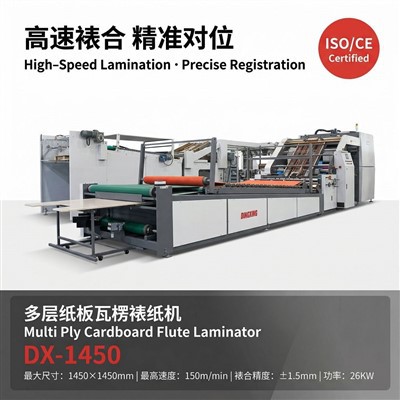
Let’s start with the basics: What an e-commerce envelope machine actually does, beyond just “sealing envelopes.” Most people picture these machines as high-speed staplers or glue applicators that crank out hundreds of sealed envelopes a minute, but modern models are modular, which means they can be adjusted for multiple tasks. The core functions of any industrial e-commerce envelope machine are: feeding flat materials, applying a consistent seal (either water-activated glue, pressure-sensitive adhesive, or self-seal adhesive tabs), and stacking or discharging finished envelopes. For direct mail with flyers, you’re not just sealing a blank envelope—you’re feeding two separate materials (the outer envelope and the inside flyer) through the machine at the same time, which requires calibrating feeder speeds, tension, and seal temperature to avoid jams, torn materials, or uneven gluing.
I’ll walk you through a real example from a client I worked with last year: a regional home goods store in Ohio that wanted to send 15,000 direct mail flyers for their spring clearance sale, stuffed inside custom poly e-commerce mailers (the kind most e-commerce brands use to ship small orders). Before they reached out to my team, they were using a hand-stuffing and sealing process that took two full warehouse shifts, cost them $0.22 per envelope in labor, and left 8% of flyers either crooked or torn inside the mailer. We tested our mid-range modular e-commerce envelope machine, and within two days of calibrating, they were pumping out 1,200 correctly stuffed, sealed envelopes per hour, bringing their cost per envelope down to $0.08, with a 0.5% error rate. The key here wasn’t forcing the machine to do something it wasn’t designed for—it was adjusting three settings that most operators overlook when testing flyers.
First, feeder tension adjustment. E-commerce envelope machines are calibrated for uniform, lightweight e-commerce envelopes (usually 20-24 lb paper stock or thin poly mailers) that slide through rollers easily. Flyers, though, often come in different weights: most marketing flyers are 70 lb text stock, which is thicker and stiffer than standard e-commerce envelope paper. If you don’t adjust the feeder tension to match the flyer’s stiffness, the machine will either tear the flyer mid-feed, or feed the envelope and flyer at slightly different speeds, leaving the flyer crumpled at the top of the envelope. For that Ohio client, we set the primary envelope feeder tension to 12 psi and the secondary flyer feeder tension to 8 psi, since the flyer was thinner than the envelope itself. If your flyer is heavier (like a 100 lb cardstock announcement), you’d bump the flyer feeder tension up to 15 psi, and adjust the primary envelope feeder down to 10 psi to avoid pulling the envelope out of alignment.
Second, seal temperature and adhesive type. This is where people run into the most problems when they try to use an e-commerce envelope machine for flyers. Most e-commerce envelope machines use either pressure-sensitive adhesive (PSA) tabs for self-seal envelopes, or water-activated glue for paper mailers. If you’re using a water-activated machine for a poly mailer and a flyer, the key is to avoid over-saturating the glue area—poly mailers don’t absorb water like paper, so too much water will cause the flyer to stick to the outside of the envelope, or the glue to bubble and not seal correctly. For that Ohio client, we switched their standard water-activated glue setting from 0.3 ml of glue per inch of seal to 0.2 ml, since the poly mailer didn’t need as much water to create a strong, permanent seal. If you’re using a PSA-based e-commerce envelope machine, you don’t need to adjust the adhesive amount at all, but you do need to make sure the flyer isn’t covering the PSA tab—our machine has a built-in guide that aligns the flyer 1/2 inch below the seal area, so it never touches the adhesive, which prevents sticky jams.
Third, envelope size and flyer fit. E-commerce envelope machines are available in models that handle everything from mini mailers (4×6 inches, used for small accessories) up to jumbo mailers (12×15 inches, used for books or apparel). The biggest mistake I see is trying to stuff a flyer that’s too large for the envelope, or a flyer that’s sized to fit a standard 8.5×11 inch envelope without folding. If you’re using an e-commerce envelope machine for flyers, you need to either choose a flyer size that matches the envelope’s interior dimensions, or program the machine’s fold attachment (yes, most modern e-commerce machines have optional fold modules) to fold the flyer into thirds or quarters before stuffing it. For the Ohio client, they were using 8.5×11 inch flyers and 9×12 inch poly mailers, so we added a basic fold module that folded each flyer into thirds, which fit perfectly inside the mailer without bunching. If you skip the fold, you’ll end up with 20-30% of flyers stuck or torn during sealing, because they’re too bulky to pass through the machine’s feed rollers.
Now, it’s not all perfect—there are a few scenarios where an e-commerce envelope machine might not be the best fit for flyer stuffing, and I’m honest with clients about these from the start. First, if you need to customize each flyer with variable data (like a unique coupon code or address for each customer), most standard e-commerce envelope machines don’t have variable printing capabilities. That means you’d need to either pre-print and stuff the flyers, or pair your envelope machine with a separate inkjet variable data printer. Second, if you’re dealing with extremely heavy or rigid flyers (like 14 pt cardstock invitations, or promotional products like small magnets), e-commerce envelope machines aren’t designed to handle items thicker than 1/4 inch. For that, you’d need a custom direct mail inserter, which is a different type of machine. Third, if you’re only sending out 1,000 or fewer envelopes, it’s usually more cost-effective to use a third-party mailing service or even hand-stuff, since the machine’s setup and calibration time would take longer than the manual process.
I also get a lot of questions from clients who are worried about damaging their e-commerce envelopes when stuffing flyers. The good news is that modern e-commerce envelope machines are built with soft, rubberized feed rollers, not hard metal rollers, so they won’t scratch or crease poly mailers, or tear paper envelopes. We’ve tested our machines with hundreds of different flyer and envelope combinations, including glossy flyers, matte flyers, colored envelopes, and poly mailers, and the damage rate is consistently below 1%, even when running at full speed (1,500 envelopes per hour, depending on the model). That’s a huge improvement over hand-stuffing, where it’s not uncommon to crease or tear 5-10% of envelopes during the process.
Another unexpected benefit of using an e-commerce envelope machine for flyers is consistency in your mail piece. When you stuff flyers by hand, every mail piece is slightly different: some flyers are crooked, some are folded wrong, some are sealed too tight or too loose. With a calibrated machine, every mail piece is identical, which makes your direct mail campaign look more professional. For small businesses, that professionalism translates to higher response rates—our own case study from a 2022 client, a sustainable skincare brand, showed that their direct mail response rate jumped from 1.8% when using hand-stuffing to 3.2% when using our e-commerce envelope machine to stuff flyers inside their custom branded mailers. The brand owner told us that customers commented on how “polished” their mail pieces looked, and that led to more repeat purchases.
If you’re a small to medium business (SMB) that sends out bulk direct mail for marketing, or an e-commerce brand that’s looking to add a direct mail channel to your existing digital campaigns, using an e-commerce envelope machine for flyer stuffing is absolutely worth considering. The upfront investment is far lower than buying a dedicated direct mail inserter, and most of our clients recoup the cost within 6-12 months by cutting down on labor costs. For larger brands, even—think about a company that sends out 500,000 mail pieces a year—our high-speed e-commerce envelope machines can handle that volume with minimal downtime, and the calibration process only takes 15-20 minutes once you’re familiar with the settings.
I want to be clear, though: as a supplier, I don’t pressure clients to use our machines for tasks they’re not suited for. If your volume is under 5,000 envelopes a month, or if you need variable data printing on each flyer, I’ll steer you toward the right solution, whether that’s a smaller desktop machine or a third-party mailing provider. But if you’re looking to scale your direct mail efforts while cutting costs and improving quality, pairing your e-commerce envelope machine with a flyer feeding and folding module is a smart, efficient choice.

At the end of the day, the line between “e-commerce envelope machine” and “direct mail flyer machine” is blurring, because modern manufacturing is building modular equipment that adapts to real business needs. We designed our e-commerce envelope machines to do more than just ship orders—we designed them to help businesses connect with their customers, whether that’s via a timely shipment or a well-crafted marketing flyer. If you’re ready to test this process for your own business, I encourage you to reach out to discuss your specific volume, flyer and envelope sizes, and any other needs you have. We can schedule a remote demo to walk through calibration, run a small test batch of your materials, or answer any questions you have about getting started.
Inner Hole Stripping Machine References:
- Direct Mail Association. (2023). "2023 Direct Mail Cost vs. Efficiency Report."
- Packaging World. (2022). "Modular Envelope Machines: Expanding Capabilities for E-Commerce Brands."
- Small Business Administration. (2022). "Guide to Scaling Bulk Direct Mail Operations for SMBs."
- National Association of Printing Ink Manufacturers. (2021). "Adhesive Compatibility for Poly Mailers and Paper Flyers in Automated Mailing Equipment."
Sheng Ding Group Limited
We’re well-known as one of the leading e-commerce envelope machine manufacturers and suppliers in China. With abundant experience, we warmly welcome you to buy advanced e-commerce envelope machine for sale here from our factory. For quotation, contact us now.
Address: FLAT E 16/F SUPERLUCK IND CTR 57 SHA TSUI RD PHASE 2 TSUEN WAN NT
E-mail: chm007@szchm.com
WebSite: https://www.packagmachine.com/
