Let me cut through the noise right away—if you’re here because you just ordered a three-phase oil immersed transformer and saw a number labeled “no-load loss” on the spec sheet, or because you’re the one sifting through specs to pick the right unit, this post is for you. I’ve spent 12 years in the thick of selling, installing, and troubleshooting these transformers, so I’m not here to throw around jargon to impress you. I’m here to explain exactly what that no-load loss number means, why it matters for your bottom line, and why, as someone who sources and sells three-phase oil immersed transformers for a living, I never gloss over this detail. Three Phase Oil Immersed Transformer
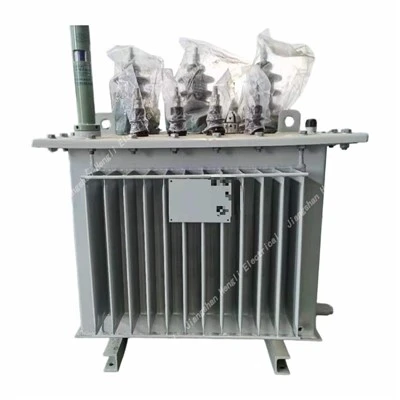
First, let’s get the basic definition straight, no fancy textbook fluff. A three-phase oil immersed transformer has two big jobs: stepping voltage up or down to move power efficiently from the grid to your facility (a factory, a data center, a mining site, whatever) and keeping that power flowing without wasting energy. The no-load loss is the energy the transformer eats up even when it’s doing almost nothing—meaning when it’s connected to the grid, switched on, but there’s no load on the secondary side, like when your plant is shut down for the weekend or a retail store is closed overnight.
Wait, that’s not nothing, right? If your transformer is on 24/7 (and most three-phase oil immersed transformers for commercial and industrial use are), that “nothing” adds up fast. Let’s put numbers to it. Say you have a 1000 kVA three-phase oil immersed transformer with a no-load loss of 0.2% of rated capacity. That’s 2 kW of power wasted, every single hour, no break. At $0.12 per kWh (that’s the average US industrial rate as of 2024), that’s $1,752 a year. If you have a bigger unit, say a 5000 kVA transformer with a no-load loss of 0.15%, that’s 7.5 kW wasted, which equals $6,570 a year. I’ve had clients come to me in 2022 after getting their first energy bill from a new transformer, panicking because they didn’t realize that “small” no-load loss was costing them more than their monthly office supply budget. That’s the real-world weight of this number.
Now, why does it exist? There are two main components of no-load loss, and they’re both related to the core of the transformer— the big block of steel that the copper windings are wrapped around. First is iron loss, also called core loss. This is caused by two things in the steel core: hysteresis and eddy currents. Hysteresis is when the magnetic field in the steel flips back and forth as AC power cycles, and that flipping creates friction (in a way) that turns into heat, not power. Eddy currents are tiny electrical currents that swirl around in the steel core because of that changing magnetic field—those too waste energy as heat. The oil immersed part matters here because the oil isn’t just for cooling; it keeps the core and windings at a steady temperature, which affects how much of these losses you get.
The second component of no-load loss is excitation current, or sometimes called no-load current. This is the tiny amount of current that flows through the primary winding even when the secondary is open (no load). It’s only about 1-3% of rated current for good three-phase oil immersed transformers, but it’s not zero, and that small flow of current adds to the energy wasted.
Here’s the part most clients don’t get: no-load loss is different from load loss. Load loss is the energy wasted when the transformer is actually carrying full power, like when your factory is running all shifts. Load loss depends on how much current is flowing through the windings, so it goes up with the square of the load. No-load loss is fixed—constant, every hour the transformer is online, regardless of what you’re pulling from it. That’s why for facilities that run 24/7/365, no-load loss is often the bigger waste over the life of the transformer. For example, over 20 years, that 2 kW no-load loss I mentioned earlier? That’s $35,000 in wasted power. That’s enough to buy a lot of extra equipment or cover a year of property taxes for a small warehouse.
Now, why do no-load loss numbers vary so much between different three-phase oil immersed transformer suppliers? It comes down to how the core is made. Cheaper transformers might use lower-grade electrical steel, thicker laminations (the thin sheets of steel that make up the core, stacked together to reduce eddy currents), or skip advanced annealing processes— that’s heating the core after stamping it to release the stress from cutting and shaping, which cuts down on hysteresis loss. Higher-quality units, like the ones I source and sell, use grain-oriented electrical steel (GOES) specifically designed for transformer cores, thinner laminations, and precise annealing. A good three-phase oil immersed transformer from a reputable supplier will have no-load loss that meets or exceeds IEC 60076 or ANSI standards— that’s the global and US standards for power transformers, by the way, so you can rely on those numbers being accurate.
Wait, I have to be honest with you: not all suppliers are straight about no-load loss. A few years back, I had a client who bought a cheap three-phase oil immersed transformer from a foreign supplier online, and the spec sheet said their 2000 kVA unit had a no-load loss of 0.18%, right on spec. When we tested it after installation, actual no-load loss was 0.25%— that’s 25% more wasted power than advertised. Over 20 years, that’s an extra $18,000 in costs, all because of a supplier that cut corners. That’s why when you’re shopping, you need to ask for third-party test reports, not just the spec sheet. I always include a full no-load loss test (along with load loss, temperature rise, and insulation tests) with every transformer I sell, no extra charge, because I don’t think my clients should have to guess about something that impacts their bottom line for decades.
Another thing to consider: no-load loss interacts with the oil cooling system of the three-phase oil immersed transformer. The oil’s job is to carry heat from the core and windings to the radiator fins, where it dissipates into the air. If the no-load loss is higher, more heat is generated in the core, so the oil has to work a little harder to cool it, which means slightly higher circulating pump power (for forced-oil, or FOA, units) or just higher overall operating temperatures. Higher operating temperatures shorten the lifespan of the insulation on the windings, which is a whole other cost— you could be looking at needing to rewind or replace the transformer 5 or 10 years earlier than you should, all because of a bad no-load loss number.
Let’s talk about when no-load loss is especially critical. If your operation has periods of low or no load for long stretches—like a mining site that’s only running at 30% capacity for half the year, or a retail park with transformers that are mostly idle at night— no-load loss will be a huge portion of your total energy cost for the transformer. I had a paper mill client last year who upgraded their old transformer to a new three-phase oil immersed unit with a 0.16% no-load loss, down from their old unit’s 0.28%. Their annual savings? $12,000. That’s money they put into upgrading their pollution control system, which is way better than wasting it on energy they didn’t need to use.
Now, let’s clear up a common myth: no-load loss isn’t just for big transformers. Even small three-phase oil immersed transformers, like 100 kVA units for a strip mall or a small manufacturing shop, have no-load loss that adds up. A 100 kVA unit with 0.2% no-load loss is 0.2 kW, which at $0.12/kWh is $175 a year. That’s not pocket change, especially for a small business that’s already dealing with tight margins.
So, what should you do when you’re evaluating a three-phase oil immersed transformer? First, don’t just look at the upfront price. Add up the 20-year cost of no-load loss, plus load loss, plus maintenance, plus replacement costs. That’s the total cost of ownership (TCO), and it’s way more important than the sticker price. Second, ask for verified no-load loss numbers—third-party tested, not just supplier claims. Third, match the no-load loss to your load profile. If your transformer is going to run at full capacity 24/7, you might pay a little more upfront for a lower no-load loss unit, and save tens of thousands over the life. If it’s only going to be used a few hours a day, a mid-tier no-load loss unit is probably fine— don’t overspend on something you don’t need.
I’ve been doing this long enough that I’ve seen transformers fail because of bad no-load loss numbers, clients lose money because they didn’t understand the metric, and I’ve also seen clients save a fortune by picking the right three-phase oil immersed unit with a transparent, accurate no-load loss rating. That’s why I always take the time to walk clients through this, not just send a quote. Transformer technology hasn’t changed a ton in the last 20 years, but the details—like no-load loss—are what separate a good, reliable unit from one that costs you money from day one.
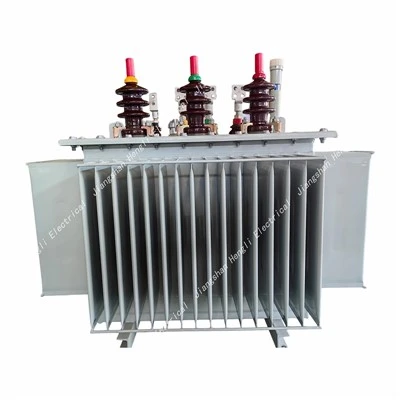
At the end of the day, the no-load loss of a three-phase oil immersed transformer isn’t just a number on a spec sheet. It’s a measure of how efficiently your transformer works when you’re not even using its full capacity, and it’s a direct hit to your operating costs for decades. If you’re in the market for a new unit, or you’re looking to replace an old one that’s costing you too much in wasted energy, I can help you sort through the specs, get third-party test data, and pick the right unit for your load and budget. Don’t guess at this—ask the hard questions, and make sure you’re getting a transparent, high-quality product that doesn’t hide unnecessary waste in its design.
Dry Type Transformer References
- IEC 60076-1: Power transformers – Part 1: General requirements
- ANSI/IEEE C57.12.00: Standard General Requirements for Liquid-Immersed Distribution, Power, and Regulating Transformers
- Transformer No-Load Losses: Causes, Testing, and Mitigation – Electrical Construction & Maintenance, 2023
Zhejiang Jiangshan Hengli Electrical Co., Ltd.
Zhejiang Jiangshan Hengli Electrical Co., Ltd. is one of the most professional three phase oil immersed transformer manufacturers and suppliers in China, featured by quality products and low price. Please rest assured to wholesale cheap three phase oil immersed transformer in stock here and get pricelist from our factory. Customized orders are welcome.
Address: 212 Fuzhu Street Sidu Town, Jiangshan, Zhejiang, China
E-mail: henglijs@foxmail.com
WebSite: https://www.henlypower.com/
