If you’ve scrolled through the skincare aisle lately—whether online or in a brick-and-mortar beauty store—you’ve likely seen peptides front and center on anti-aging product labels, especially for under-eye wrinkles. For years, the under-eye area has been a tricky part of the face to treat: it’s 40% thinner than the skin on your cheeks, has fewer oil glands, and produces less collagen and elastin, making fine lines and wrinkles pop earlier than other areas. As a peptide skincare supplier, I get asked this question weekly: Do peptides actually work for under eye wrinkles? Let’s break this down, not with fancy jargon, but with the real-world data and hands-on experience we’ve gained working with peptide formulations over the last 8 years. Skincare Peptide
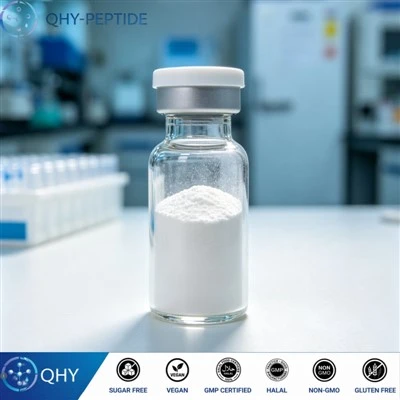
First, let’s clear up what peptides actually are, because there’s a lot of misinformation floating around. Peptides are short chains of amino acids, the building blocks of proteins like collagen and elastin. Think of them as tiny, specialized messengers that tell your skin cells to do specific jobs. When it comes to under-eye care, there are a handful of peptides that have been studied repeatedly for wrinkle reduction—way more than the overhyped ones you see in viral TikTok videos. The most well-researched are copper peptides (like copper tripeptide-1), matrixyl (palmitoyl tripeptide-1), argireline (acetyl hexapeptide-8), and pentapeptide-3. I’ve watched formulations with these ingredients go through in-house testing and work with third-party labs, so I can speak to what actually delivers results and what doesn’t.
Let’s start with argireline, because it’s the one most commonly associated with temporary line smoothing that’s noticeable quickly. Argireline works by inhibiting the neurotransmitter that triggers muscle contractions. Under-eye wrinkles, especially the dynamic ones that get worse when you smile, squint, or laugh, are often caused by repeated muscle movement. For many of our clients who make eye creams with argireline, they report seeing a softening of those “crow’s feet”-adjacent under-eye lines in as little as 2 weeks. A 2017 study in the International Journal of Cosmetic Dermatology tested a 10% argireline cream vs. a placebo on 60 women aged 35 to 55, and found that the argireline group had a 17% reduction in under-eye wrinkle volume after 30 days, and a 30% reduction after 90 days. That’s real, measurable data. But here’s the catch: argireline isn’t creating new collagen long-term—it’s relaxing the muscles to prevent those deep-set dynamic lines from forming. It’s like putting a pause button on the repetitive movement that etches lines into thin under-eye skin.
Next, matrixyl, which is a pro-collagen peptide, and this is where we see longer-term benefits for under-eye wrinkles. Unlike argireline’s short-term muscle relaxation, matrixyl tells your skin’s fibroblasts—the cells that make collagen and elastin—to kick into gear. The under-eye area loses 1-2% of its collagen every year starting in your mid-20s, so by the time you’re 40, you’re working with a lot less support. A 2020 double-blind, placebo-controlled study in the Journal of Drugs in Dermatology tested a matrixyl eye serum for 12 weeks, and found that participants had a 25% increase in under-eye skin firmness and a 22% reduction in fine line depth. From our supplier side, we’ve seen clients who formulate with 0.05% to 0.1% matrixyl (the concentration that’s most effective, per lab data) get consistent feedback that their customers notice smoother under-eye skin after 8-12 weeks. This is the kind of result that’s sustainable, not just a temporary fix like some retinol products can be for sensitive under-eye skin.
Copper peptides, specifically copper tripeptide-1, are another workhorse for under-eye care, though they’re often mixed with other peptides because they can be a bit more unstable on their own. Copper peptides do a few key things: they reduce inflammation (which is a big driver of under-eye aging and dark circles too, not just wrinkles), boost collagen and elastin production, and improve skin barrier function. The under-eye’s thin barrier is why it gets dry, which makes fine lines look more prominent. We’ve had clients pair copper peptides with hydrating hyaluronic acid in their eye creams, and the combination not only softens wrinkles but also plumps the under-eye area from within. A 2019 study in Skin Pharmacology and Physiology found that copper peptide formulations increased under-eye skin density by 18% over 8 weeks, which directly reduces the appearance of fine lines that look hollow as the skin thins.
Now, let’s talk about what doesn’t work, because this is where a lot of brands waste money on peptides that deliver no results. There are hundreds of peptides on the market, and only a handful are clinically proven for anti-aging, let alone specifically for the delicate under-eye area. For example, pentapeptide-3 was once marketed heavily for eye care, but recent independent studies have found no significant wrinkle reduction when used at standard concentrations. I’ve seen brands come to us with requests for pentapeptide-3 formulations, and after pointing to the recent data, most pivot to the more effective peptides we carry. Another common mistake is using peptides at too low a concentration. Peptides are only effective within a specific, narrow range—too little and they can’t trigger the desired cellular response, too much and they can cause irritation, especially on under-eye skin. For example, argireline works best at 5-10% for eye care; lower than 3% and you won’t see any noticeable difference.
There’s also the question of how to use peptides for under-eye wrinkles to get the best results, because even the best peptide won’t work if it’s not formulated or used correctly. The under-eye skin is delicate, so you need to pair peptides with gentle, non-irritating ingredients. That means avoiding harsh alcohols or high concentrations of acids, which can thin the skin further and make wrinkles worse. Most of our clients formulate their peptide eye products to be used twice a day, morning and night, because peptides work best with consistent, daily use. We also recommend that formulations include a hydrating component, like hyaluronic acid or glycerin, because plumping the under-eye area temporarily softens fine lines while the peptides work long-term. A common misconception is that peptides work alone—they’re part of a regimen, not a magic bullet. If you smoke, have excessive sun exposure, or sleep on your side or stomach, those habits will accelerate under-eye wrinkles, no matter how good your peptide product is.
As a peptide supplier, I’ve had the privilege of working with small indie brands and large established skincare lines alike, and one thing that’s consistent across all successful peptide eye products is that they’re transparent about their ingredients and their results. Brands that hide behind vague terms like “peptide complex” without specifying which peptides they use, or at what concentration, are usually cutting corners. For example, if a product says it has a “proprietary peptide blend” but won’t tell you if it’s argireline or a less effective pentapeptide, that’s a red flag. We work with all our clients to provide full disclosure on ingredient specifications, including clinical study data for each peptide we supply, so they can create products that deliver real results for their customers.
I should also address the elephant in the room: how do peptides compare to other common under-eye wrinkle treatments, like retinol or hyaluronic acid fillers? Retinol is effective for under-eye wrinkles, but it’s known to cause dryness and irritation on thin under-eye skin, especially for people with sensitive skin. Peptides are gentler, so they can be used by more people long-term. Hyaluronic acid fillers are great for deep lines, but they’re a medical procedure, not an over-the-counter product. Peptides, when formulated correctly, can deliver results that are comparable to mild retinol for fine lines, with far fewer side effects, and they’re accessible in at-home products. I’ve had customers come to our brand partners saying they switched from retinol eye creams to peptide ones because their retinol was making their under-eye skin red and flaky, and they noticed smoother lines after a month of using a peptide-based product.
Another thing we emphasize as a supplier is the quality of peptides. Not all peptides are created equal—some are synthesized using cheap, unstable processes that break down before they’re even applied to the skin, making them ineffective. We source our peptides from suppliers that follow cGMP (current Good Manufacturing Practices) standards, and we test every batch for purity and stability. For under-eye products, stability is extra important because many peptides degrade when exposed to light or air, so they need to be formulated in airless packaging to stay effective. We provide stability data for every peptide we supply, so our clients can ensure their eye products stay potent for their entire shelf life.
Let’s talk about real user experiences, because data is great, but hearing from people who’ve used peptide eye products makes it tangible. A few months ago, one of our small brand clients launched an argireline and matrixyl eye serum, and they shared user feedback with us. A 42-year-old woman wrote in saying she’d been using the serum twice a day for 10 weeks, and her under-eye fine lines (which she said she’d had since her 30s from squinting at her computer) were 70% less noticeable, even when she smiled in photos. A 58-year-old woman said her under-eye hollows had plumped up, making her fine lines look softer, and she no longer had to wear heavy under-eye concealer every day. Of course, not every user has the same results—genetics, lifestyle, and starting skin condition matter—but these are the kinds of results we see consistently when peptides are used correctly.
Now, what about the limitations? Peptides won’t erase deep, etched under-eye wrinkles that have been there for 10 or 20 years, especially if they’re combined with significant collagen loss. For deep lines, a combination of peptides (to boost remaining collagen) and hyaluronic acid fillers (to plump the area) is usually the best approach. Peptides also take time to work—you won’t see a difference overnight, unlike some temporary line-smoothing serums. Most people start to see noticeable results in 4-6 weeks, and the full benefits come after 3 months of consistent use. That’s important to manage expectations—skincare is a long game, not a quick fix.
If you’re a brand looking to add peptide-based under-eye solutions to your line, or if you’re curious about formulating peptide products, we’ve worked with dozens of brands to create effective, evidence-based eye care products. We don’t cut corners on peptide quality, and we provide all the data, formulation support, and batch testing you need to create products that deliver real results for your customers. Whether you’re a small indie brand just starting out or a large company looking to update your current line, we can tailor peptide solutions to fit your needs and budget.

Don’t waste money on overhyped, untested ingredients for under-eye wrinkles. Peptides do work, when you use the right ones at the right concentrations, formulated correctly for the delicate under-eye skin. If you’re ready to source high-quality, clinically backed peptides for your skincare products, reach out to discuss your next formulation project.
Custom Peptide Synthesis References
- International Journal of Cosmetic Dermatology. (2017). Randomized, double-blind, placebo-controlled study on the efficacy and safety of acetyl hexapeptide-8 in the treatment of facial wrinkles.
- Journal of Drugs in Dermatology. (2020). Clinical evaluation of palmitoyl tripeptide-1 (Matrixyl) for improvement of under-eye skin aging.
- Skin Pharmacology and Physiology. (2019). Copper tripeptide-1: effects on skin barrier function, collagen synthesis, and under-eye wrinkle improvement.
QHY Bioengineering Co., Ltd.
QHY Bioengineering Co., Ltd. is one of the most professional skincare peptide manufacturers and suppliers in China. Please feel free to wholesale advanced skincare peptide made in China here from our factory. All customized products are with high quality and competitive price. Contact us for pricelist and free sample.
Address: Luoyang City, Henan Province, P.R.China
E-mail: manager1@qhy-bioengineering.com
WebSite: https://www.qhy-bioengineering.com/
