Hey everyone, thanks for swinging by today. I’m Jake, and I’ve been selling outdoor fans for over 10 years now—mostly to restaurants, patio bars, event venues, and even homeowners who love their backyards as much as I love mine. One question I get nonstop, especially from folks who are juggling summer busy seasons or dealing with that sweltering late summer stretch, is “Can my outdoor fan run 24/7?” It’s such a common question, and I used to just say “sure, if it’s rated for it” back when I first started. But over the years, I’ve learned there’s a lot more to it than a simple yes or no. Let me break this down like I would for a customer who just walked into my showroom—no super technical jargon, just real, hands-on stuff. Outdoor Fan
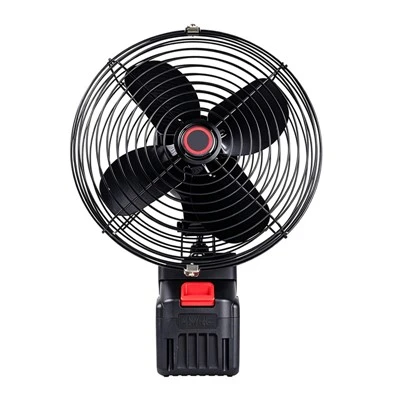
First off, let’s get one thing straight: not all outdoor fans are built the same. I’ve seen cheap, off-the-shelf patio fans that a big box store sells for $50 or $60—guys, those are not designed to run 24 hours a day. I’ve had customers come back with those, saying they ran their fan every night during a wedding season and it died within three months. The issue there is the motor. Most low-cost outdoor fans use a standard induction motor that’s made for intermittent use—like a few hours a day, maybe 12 max. Run that 24/7, and the motor overheats, the windings burn out, and before you know it, you’re dropping another $60 on a new one.
The fans I sell, though? They’re built with continuous-duty motors. That’s the key difference right there. What’s a continuous-duty motor, anyway? It’s a motor that’s engineered to run nonstop for weeks, even months, without overheating. I tested one a couple years ago—we put a heavy-duty outdoor fan outside my warehouse, ran it 24/7 for 90 days straight, and the only maintenance it needed was a quick wipe-down to get rid of dust and spider webs. It didn’t skip a beat. That’s the kind of fan you want if you’re a restaurant that’s open from 11am to 11pm, seven days a week, or a concert venue that has shows every night during summer tour season.
But wait—even a fan with a continuous-duty motor isn’t bulletproof. There are a few factors that can make or break how well it holds up when running 24/7, and a lot of them have nothing to do with the fan itself. Let’s talk about weather, for starters. Outdoor fans are meant to handle rain, humidity, wind, even extreme heat, right? But if you’re in a super humid area—like Florida or the Gulf Coast—moisture can build up inside the motor housing over time, even if it’s rated for wet locations. I had a customer in Tampa who ran his fan 24/7 for six months, but he didn’t realize that the drain hole in the motor housing was clogged with leaves. The moisture got trapped, corroded the internal parts, and it died faster than it should have. Lesson there: if you’re running a fan nonstop, you’ve got to do quick checks every few weeks to clear out debris, make sure there’s no standing water anywhere near the motor.
Then there’s installation. I’ve seen people hang an outdoor fan from a rickety old porch beam, or run wiring that’s not rated for outdoor use, and wonder why it’s acting up. If you’re running 24/7, the electrical side matters more than ever. The wiring has to be outdoor-rated (that’s UL-listed, for the folks who know) because regular indoor wiring can degrade in the sun and weather. Also, the mounting—if the fan is wobbly, that puts extra stress on the motor and the blades. I always tell customers: if you’re going to run it nonstop, invest in a proper installation. Don’t just use a random screw you found in your garage. It’ll save you money in the long run, I promise.
Another big one: load and usage. Wait, what does that mean? If your fan is moving 5000 CFM (cubic feet per minute) of air for a 10×10 patio, that’s one thing. If you’re running the same fan to cool a 20×30 deck with 50 people under it, that’s a heavier load. Continuous-duty motors can handle that, but they’ll run a bit hotter than they would under a lighter load. So if you’re pushing your fan way past its CFM rating, 24/7 use will shorten its lifespan. I tell customers to size their fan right for their space, and if you’re running it nonstop, maybe go a little bigger than you think you need. It’ll work less hard, last longer, and actually cool better too.
Now, let’s talk about the flip side. There are times when running an outdoor fan 24/7 is not just unnecessary, but maybe even a bad idea. For example, if you have a fan that’s not sealed properly—like, if it’s got gaps where bugs can get in, or the motor housing is rusting. Bugs can build nests in the blades or the motor, which can throw off the balance and make it strain. Rust is a big one too—even a stainless steel fan can get rust spots if it’s near salt water (like a coastal home). If rust is starting to form, running it 24/7 will make it spread faster, so you’re better off turning it off when you can, and doing regular maintenance to stop the rust.
Also, energy costs. I get it—you want a cool patio for your guests, but running a fan nonstop adds up on your electric bill. Let’s do a quick math check: a 1/3 HP outdoor fan uses about 0.25 kW per hour. If you run that 24/7, that’s 6 kWh a day, 180 kWh a month. At the average US electric rate of 15 cents per kWh, that’s $27 a month. Not a huge bill, but if you have multiple fans, or a bigger motor (like 1 HP, which uses around 0.75 kW), that’s $81 a month. I don’t want to scare you off, but it’s something to consider. Maybe you can run it on a timer—like, turn it off for a couple hours in the middle of the night if it’s not too cool, but run it during the busy times. That’s a happy medium.
Now, let’s get into what I’ve seen work over the years. Most of my commercial customers—restaurants, event spaces, even resorts—run their outdoor fans 24/7 during peak summer months, and some even year-round. But they stick to the right fans. I recently sold a set of 8 heavy-duty outdoor fans to a beach resort in South Carolina. They run them 24/7 from May to September, and they’ve had zero issues in two years. They do a monthly check: wipe down the blades, clear the drain holes, tighten the mounting screws. That’s it. No big repairs, no replacements. On the other hand, a customer who bought a cheap fan from a big box store last year tried to run it 24/7, and it died after 45 days. They came back to me, and I sold them a continuous-duty model, and now it’s running fine.
Wait, also—safety. Can outdoor fans running 24/7 be a fire hazard? That’s a question a lot of people ask, and it’s a valid one. If the fan is properly installed, has a UL rating for continuous use, and is maintained regularly, the risk is super low. But if you have a frayed wire, or dust buildup inside the motor, that can be a problem. I always tell customers to never leave a fan running near dry leaves or debris, and to check the wiring once a month. It’s just a quick, 5-minute thing, and it keeps everyone safe.
Let me clear up a common misconception, too. A lot of people think outdoor fans are just for cooling, but some are designed to do more—like dehumidifying, or pulling air through a space. If you’re using a fan for those purposes, 24/7 use is even more common, and those heavy-duty models are built for that. I’ve got a customer who uses outdoor fans to dry out a storage patio for garden equipment, runs it 24/7, and it’s been going strong for three years.
Now, what about the cold months? Can you run an outdoor fan 24/7 in winter? If you’re using it to circulate warm air under a patio enclosure, maybe, but most people turn them off in winter. Even continuous-duty motors can handle cold, but if there’s snow or ice on the blades, running it can throw off the balance and damage it. So that’s another thing to consider—use case.
Here’s the bottom line: yes, outdoor fans can run 24/7, but only if you’ve got the right one. Skip the cheap, intermittent-use models. Look for a fan with a clear “continuous-duty” rating, UL-listed for outdoor use. Then, make sure you install it correctly, do quick regular maintenance (wipe downs, clear debris, check wiring), size it right for your space, and keep an eye on weather and wear. I’ve been through enough fan failures and happy customers to know that this works.

For anyone out there who’s shopping around for an outdoor fan, whether it’s for a small backyard patio or a big commercial space, I can help. I’ve got all the models, I can answer questions, and I can even give you tips on installation and maintenance to make sure your fan runs as long as it should. If you’re looking to buy or just talk through your needs, hit me up—let’s chat. No pressure, just real advice from someone who’s been in this game for years.
Outdoor Fan References
- U.S. Department of Energy. Energy Efficiency Tips for Outdoor Fans.
- Air Movement and Control Association International. Standards for Continuous-Duty Fan Motors.
- Underwriters Laboratories. UL 507 Standard for Safety for Electric Fans.
- Consumer Reports. Outdoor Fan Buying Guide for Long-Term Use.
- National Restaurant Association. Commercial Patio Equipment Maintenance Best Practices.
Yongkang Agudo Industry & Trade Co., Ltd.
As one of the most professional outdoor fan manufacturers in China, we’re featured by high quality customized products. Welcome to wholesale bulk advanced outdoor fan in stock here from our factory. If you have any enquiry about pricelist and free sample, please feel free to email us.
Address: 2nd Floor, Unit 2, Building 5, No.46 Xicheng Huacheng West Road, Xicheng Subdistrict, Yongkang City, Zhejiang Province
E-mail: 15888900905@163.com
WebSite: https://www.cnagudo.com/
