Hey there, let’s cut through the jargon for a second—if you’ve ever worked in manufacturing, food & beverage, pharma, oil & gas, or even water treatment, you’ve probably glanced at my products: filter and separator series, and wondered, “How the heck does this thing actually catch tiny solid gunk without clogging up my whole line?” Filter and Separator Series

I get it. I used to be on a plant floor too, pulling 12-hour shifts, troubleshooting a messy line that kept spewing crud or blowing filters every other week. I hated when people talked like filter techs were some secret club with a decoder ring. No way—let’s break this down like we’re chatting over a coffee (and a side of real, no-BS advice).
First off, let’s get one thing straight: not all filters or separators are the same. Our series isn’t a one-size-fits-all junk bin. We design each part to target specific solid particles, from grit that’s bigger than a grain of sand (say, 100+ microns) to micro-sized crud that’s way smaller than a single human hair (1 micron or less—think tiny metal shavings or fine silt). That’s why we split our lines up: filters for when you’re mostly dealing with solid bits mixed in a liquid or gas, separators when solids are hanging out with another liquid (like oil and water with metal fines) or a heavy gas, wait no—actually, let’s keep that clear: filters catch solids in a fluid (liquid/gas), separators are for splitting two immiscible fluids and catching any solids trapped in either, like oil and water with sand. Got it? Good. No more mixing those two up.
Now, how does it actually work? Let’s start with the basics, no fancy formulas. The main ways our filters and separators trap particles fall into four big buckets, and we tweak each series to use the right mix based on what you’re working with.
First up: Surface Filtration, AKA the “strainer thing” you already get. Think of a coffee filter catching grounds. That’s surface filtration. Our series uses specifically woven filter media (like polypropylene, polyester, or even stainless steel mesh, depending on your fluid) with super precise pore sizes. If a particle is bigger than the pore? It gets stuck on the surface, right there on the filter’s face. No ifs, ands, or buts. The key here is that we calibrate those pore sizes perfectly—so you don’t have micro-pores that clog in 2 minutes flat, or big pores that let your crud slip through. For example, our industrial liquid filter series has surface media calibrated to 1–100 microns, so if you’re filtering paint to keep pigment grit out, that’s exactly what you need. The downside? Over time, that layer of crud builds up, which is why our series has easy-clean options—like washable mesh or replaceable surface cartridges, so you don’t have to toss the whole unit every week.
Next: Depth Filtration. This is the unsung hero for tiny particles that would slip through surface pores. Instead of a thin, flat mesh, depth filters use a thick, layered media—think overlapping fibers wound tight, or porous cellulose-polyester blend mats stacked together. It’s not just one straight hole; it’s a messy, tangled maze of tiny gaps. A particle that’s smaller than the individual pores? It can’t go the distance through the maze, so it gets trapped somewhere in the depth of the media, not just on the surface. This is perfect for stuff like clarifying beer (catching yeast cells smaller than 1 micron) or filtering hydraulic fluid (trapping metal shavings that are way too small for surface filters). Our depth series is designed with graded density too—so the top layers catch bigger gunk, and the inner layers grab the tiny stuff. That way, the load spreads out, no single spot gets clogged instantly. I’ve seen customers switch from surface filters to depth and cut their filter changes by 70%—game changer for downtime.
Third, and my personal favorite for tricky stuff: Interception (or Impingement, if you wanna get techy). This is all about tiny particles (think sub-micron, like dust in compressed air or oil mist in lube lines) that don’t get caught by size alone. Imagine a particle floating along in a stream of fluid, moving straight. If it’s too small to follow the fluid’s little swirls? Or if it drifts close enough to a fiber in the filter media, even if it’s smaller than the pore? It slams right into that fiber, sticks, and boom—caught. That’s interception. We use super fine fibers (for our air and gas filter series, we use micro-glass fibers, sometimes coated with a tiny static charge) to make these fibers so dense, those tiny particles can’t help but run into them. The static charge is extra smart— it pulls particles in even if they’re really light, so you don’t have to cram all the fibers together (which would clog). This is why our compressed air filter series removes 99.99% of sub-micron solid particles—perfect for pharma lines where you can’t have even a speck of dust messing with product.
Fourth: Direct Impaction. Wait, is this different from interception? Yeah, for when particles are bigger, moving faster, or in gas streams. Think of a big rock in a river— it can’t follow the river’s curves, so it slams into a rock on the bank. Same idea here. For our gas/air separator series, we use things like vane packs or centrifugal chambers (wait, hold on—centrifugal is a big one for separators, I almost forgot that!). Centrifugal separation is like a spin cycle in a washing machine. When you spin a mixture of liquid (or solid in liquid/gas) at high speed, the heavier solids get thrown to the outer edge of the chamber, right? Then they slide down into a collection bucket, while the clean fluid goes out the top. This is why our oil-water-solid separators are so popular for construction sites or auto shops—they catch heavy grit, sand, and metal shavings in one spin, no filter replacement needed every day. We combine centrifugal with our other filter methods too—so even the tiny stuff that doesn’t get thrown out gets caught by interception or depth filtration.
Wait, let’s make this relatable. I’ve had a customer from a food processing plant tell me they used to use generic filters for their syrup line. The generic ones would catch the big sugar crystals, but the tiny silt from their water supply would slip through, making their syrup have a gritty texture. They switched to our depth filter series, and boom—no more grit. Another guy from an oil rig had issues with his drilling fluid line clogging, because the generic separator couldn’t catch both big rock chips and tiny metal shavings. Our combined centrifugal-filter series fixed that, cut his downtime by half.
Now, let’s talk about something people never mention: what about when things do get stuck? Our series is designed to handle that, so you don’t have to shut down your line every hour. For surface filters, we have backwash options—just reverse a little clean fluid (or air) through the filter, and the crud blows off. For depth filters, we have reverse-flow options too, or if it’s disposable, we make them easy to swap out in 2 minutes, no tools needed. And for centrifugal separators? Most have a drain at the bottom you can open every shift to dump the collected solids, no taking the whole unit apart.
But here’s the real secret: it’s not just about the filter or separator itself. It’s about matching the right series to your specific solid particles and fluid. You can’t use a small-micron filter for gritty, high-volume drilling fluid—it’ll clog in 5 minutes. And you can’t use a centrifugal separator for sub-micron dust in compressed air—it’ll miss 10% of the crud. That’s why we ask customers a few simple questions before we recommend anything: what’s the particle size you’re targeting? What fluid/gas are you working with? Is it high volume? Do you need to clean and reuse, or replace?
I’ve been doing this for over a decade, and the number one mistake I see is customers grabbing whatever’s cheapest online, not whatever fits their needs. A $20 generic filter might work for a small, low-volume line, but if you’re running a 24/7 manufacturing line, that cheap filter will cost you more in downtime and wasted product than a proper filter or separator from our series.
Wait, let’s clear up a common confusion: filters vs separators, in case you’re still mixing them up. Filters are designed specifically to catch solid particles in a fluid (liquid or gas). Separators do two things: they split two different fluids (like oil and water) and catch any solids in either of those fluids. So if you have a mix of water, oil, and sand, a separator from our series will split the oil and water, and catch the sand in the process. If you just have water with sand, a filter works fine. Simple, right?
Another thing people ask: do these methods ever fail? Of course, nothing’s perfect, but our series is engineered to minimize that. We test every unit with actual customer-like conditions—we’ll pump gritty fluid through at higher pressure than you’d use, spin separators faster than normal, to make sure they catch 99% or more of the particles we target. We also offer performance guarantees, so if it doesn’t work like we say it will, we’ll fix it.
So, if you’re tired of clogged lines, gritty product, or high filter replacement costs—you don’t have to deal with that anymore. Our filter and separator series is built for real-world use, not lab settings. We don’t use fancy tech just for the sake of it; every part is designed to catch solids reliably, reduce downtime, and save you money in the long run.
If you’re ready to stop guessing which filter or separator you need, and start getting results that actually cut your headaches, reach out to our team. We don’t do pushy sales pitches—we’ll ask you about your line, your particles, your pain points, and help you pick exactly what fits, no fluff, no jargon.
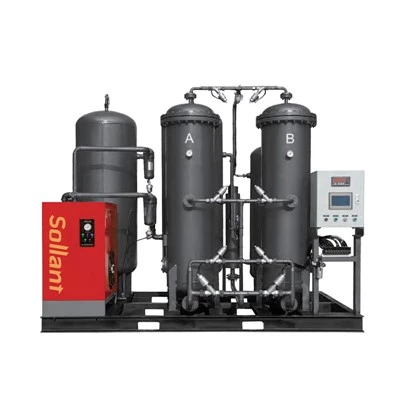
And that’s the real tea on how filter and separator series remove solid particles. It’s not rocket science, but it’s not just a mesh with holes either. It’s a mix of smart engineering, tailored to what you’re working with. Now go fix that line.
Combined Dryer References: 1. Principles of Filtration, Filtration & Separation, 2019, Vol. 56, Issue 5, pp. 24–29. 2. Centrifugal Separation for Process Fluids, Chemical Engineering Progress, 2021, Vol. 117, Issue 3, pp. 45–51. 3. Depth Filtration Media Design, Journal of Membrane Science, 2020, Vol. 605, Article 117982.
Shanghai Sollant Energy Saving Technology Co., Ltd.
As one of the most professional filter and separator series manufacturers and suppliers in China, we’re featured by quality products and good service. We warmly welcome you to buy bulk advanced filter and separator series from our factory. If you have any enquiry about cooperation, please feel free to email us.
Address: No.215, Songri Center, Beihongqiao, Jiading District, Shanghai, China
E-mail: info4@sollant.com
WebSite: https://www.sollanttreatment.com/
