Hey there, if you’re here, chances are you’ve stared at a DC motor before—maybe in a power tool, a garage door opener, or that tiny fan keeping your laptop from overheating. But have you ever stopped to ask, “How efficient is this thing, anyway?” As a DC motor supplier who’s been talking to manufacturers, hobbyists, and warehouse managers about these parts for years, I’m here to break this down like we’re grabbing coffee after a long day at work. No stuffy engineering jargon, just real talk about what DC motor efficiency actually means, why it matters, and how to make sure you’re getting a motor that’s worth your time (and money). DC Motor
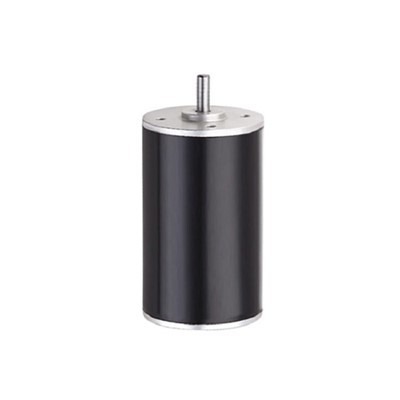
First off, let’s kill a common myth: efficiency isn’t just a random number stamped on a spec sheet. It’s a ratio—like when you bake cookies and how many actually make it to the cookie jar vs. how many get eaten by you mid-mix. For DC motors, it’s the power you get out (that’s the rotational force that spins the shaft and does work) divided by the power you put in (the electricity from your battery or wall outlet). We write that as a percentage, so if a motor’s 85% efficient, 15% of the energy you plug in is lost as heat, noise, or friction. The rest? All goes to moving whatever you need moved. That makes sense, right?
Now, let’s get into why that lost power matters more than you think. I once had a customer—small robotics shop, mostly building automated vacuum cleaners for offices—who came to me complaining his motors were dying after three months. Turns out he’d bought the cheapest DC motors he could find online, ones rated at 50% efficiency. Those motors were overheating so bad, the copper windings inside were burning out, and they were draining his 24V batteries twice as fast as he needed. After we swapped in motors rated at 80% efficiency, his battery life jumped 40%, and he didn’t have to replace half his motors every quarter. That’s the real cost of ignoring efficiency: it’s not just about electricity bills—it’s about downtime, replacement parts, and wasted money that adds up fast.
So what actually causes that lost power? Let’s keep this simple, no PhD required. First, there’s copper loss. Ever touch a phone charger that’s warm after an hour of use? That’s copper loss—electricity moving through the copper wires inside the motor creates heat. The longer or thinner the wires, the more heat (and more lost power). Then there’s iron loss, which comes from the metal core of the motor’s rotor (the spinning part) getting magnetized and demagnetized over and over again as it spins. That also makes heat. Next up is mechanical loss: friction between the moving parts, like the bearings that hold the rotor in place. And don’t forget about stray losses—little bits of energy that go missing from random places, like the magnetic field leaking out of the motor. Good motor design minimizes all these, which is why some DC motors are way more efficient than others.
Wait, but not all efficiency is created equal, right? You’ll see two types when you’re shopping: mechanical efficiency and electrical efficiency. Let’s break those down. Electrical efficiency is the ratio of the electrical power out to in—so that’s all about how well the wires and windings use electricity without wasting it. Mechanical efficiency is how well the motor turns that electrical power into actual spinning motion, minus friction and other mechanical drag. A lot of cheap motors will brag about “90% efficiency” but they’re only talking electrical, not mechanical. Always ask for the full number when you’re checking specs—we never cut corners on that with our motors, by the way. We list both, clearly, so you know exactly what you’re getting.
Here’s another thing that surprises most people: DC motor efficiency isn’t a fixed number. It changes depending on how the motor is being used. If you run a motor super slow, or super fast, or with a light load vs. a heavy load, its efficiency will shift. Like, if you have a motor designed to move a 10lb robot arm, and you’re using it to move a 1lb object, it’s going to be way less efficient. It’s like using a truck to carry a single grocery bag—most of the engine’s power is going unused, so you’re wasting gas (or electricity, in this case). The sweet spot for most DC motors is when they’re running at their rated speed and rated load. That’s where you’ll get the peak efficiency number they advertise. Run them outside that range, and efficiency drops. That’s why matching the motor to your application is key—no one wants to buy a motor that’s built for heavy machinery for a tiny, low-power project.
Let’s talk about real-world examples, because numbers without context don’t mean squat. A tiny, 12V DC motor for a toy drone? Efficiency might be around 60-70%. It’s small, has to be lightweight, so they cut some corners to save space, so lower efficiency is expected. Now, a 24V DC motor for a industrial conveyor belt? That’s gonna be 85-90% efficient. Bigger, better bearings, thicker copper wires, optimized magnetic cores—all that adds up to less wasted energy. And a brushless DC motor (we sell a ton of these, by the way)? Way more efficient than brushed ones, usually 85-92%. Brushed motors have those little carbon brushes that rub against the rotor, which creates friction and wear over time. Brushless ones don’t have that—so less mechanical loss, longer life, higher efficiency. I always tell customers: if you’re looking for long-term use, brushless is worth the extra upfront cost because the efficiency pays for itself in a few months on electricity bills alone.
Wait, let’s address the elephant in the room: why does this matter to you, specifically? Let’s say you’re a warehouse manager running automated guided vehicles (AGVs) around your facility. Those AGVs run on batteries, and every hour they’re not charging is money you’re making. If you swap out 50% efficient motors for 85% ones, your AGVs go twice as long between charges. That means fewer charging stops, more deliveries, less downtime. Or if you’re a hobbyist building a custom go-kart with a DC motor, higher efficiency means you can fit a smaller battery, making the kart lighter and faster. Even if you’re just buying a motor for a garage door opener, higher efficiency means quieter operation (less wasted energy as noise) and fewer repairs.
I get it, shopping for motors can be overwhelming. There’s so many specs, so many brands, it’s easy to just grab the cheapest one. But here’s the thing: the cheapest motor might cost less upfront, but over time, you’ll spend more on electricity, replacements, and repairs. We’ve had customers come to us after buying three cheap motors in a year—total cost: $1,200—then swap to our 85% efficient motors, and now they spend $200 a year on replacements. That’s a no-brainer, right?
So how do you measure efficiency yourself, if you want to double-check the spec sheet? It’s not too hard, but you need a few tools: a multimeter to measure voltage and current, a tachometer to measure the motor’s speed, and a way to measure the torque (the rotational force) the motor is producing. The formula for output power is (Torque × Speed) / 9.55, and input power is Voltage × Current. Divide output by input, multiply by 100, and you’ve got efficiency. But hey, if you don’t want to mess with that, just ask us for real-world efficiency data from motors we’ve tested. We’ve got lab data for every motor we sell, so you don’t have to do the work.
Common mistakes people make when choosing a motor: buying one that’s too small (it’ll overwork, low efficiency, burns out fast) or too big (wastes power on extra capacity, like the truck carrying a grocery bag). Ignoring the type of motor (brushed vs. brushless, which we touched on earlier). And not asking for full efficiency specs—like, don’t settle for a vague “high efficiency” number. Ask for the exact percentage at the rated load, because that’s the number that matters.
Speaking of which, what’s the ideal DC motor efficiency for your project? There’s no one-size-fits-all, but here’s a quick guide: if it’s a small, intermittent use project (like a toy, a portable fan), 60-75% is fine, just don’t expect it to last forever. If it’s industrial, commercial, or long-term use (AGVs, conveyor belts, warehouse equipment), aim for 80% or higher. Brushless motors will usually hit that range easily, and their longer life means even more savings down the line.
I’ve been in this game for over a decade, and the number one question I get from customers is, “How do I get a motor that’s efficient but doesn’t break the bank?” That’s why we stock a range of DC motors—from affordable brushed ones for hobbyist projects to premium brushless ones for industrial use. We don’t upsell you on stuff you don’t need, either. If you tell me your project is a small automated shelf labeler that runs 8 hours a day, I’ll recommend a 82% efficient brushed DC motor that’s cheap but reliable, not a $500 brushless one you don’t need.
At the end of the day, DC motor efficiency isn’t just a technical number—it’s about getting more work done with less energy, saving you time and money, and reducing waste. That’s why we prioritize efficiency in every motor we sell, because we know our customers are counting on these parts to work, day in and day out.
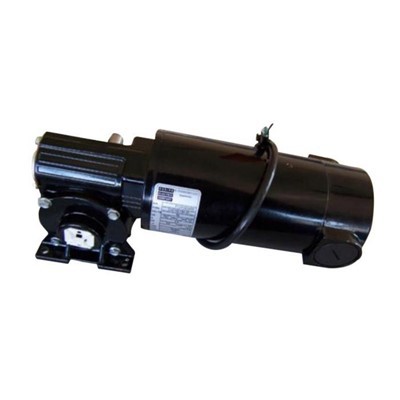
If you’re shopping for a DC motor, and you’re not sure where to start—whether you’re a small business owner, a hobbyist, or an engineer designing a new product—reach out to us. We’ll walk you through the specs, help you pick the right motor for your load and application, and give you all the efficiency data you need to make a smart choice. No pushy sales tactics, no hidden fees, just real advice from people who know DC motors inside and out. Don’t waste another dollar on inefficient motors that’ll let you down. Let’s chat, and find the perfect DC motor for your needs.
Servo Motor References:
- Electrical Motor Efficiency: Fundamentals and Applications, DOE Industrial Technologies Program, 2016
- DC Motor Design and Performance Analysis, McGraw-Hill Education, 2019
- Brushless vs. Brushed DC Motors: Efficiency and Longevity, Motion Control Today, 2022
- Practical Guide to Motor Efficiency Selection, Association of Electrical and Mechanical Trades, 2021
Zibo Auric Mechanical and Electrical Technology Co., Ltd.
As one of the leading dc motor manufacturers and suppliers in China, we warmly welcome you to buy advanced dc motor for sale here from our factory. All customized motors are with high quality and competitive price.
Address: B419, High-tech Entrepreneurship Park, High-tech Zone, Zibo City
E-mail: cui@auricmotor.com
WebSite: https://www.auricmotor.com/
