If you’ve ever ordered custom FPC (flexible printed circuit) connectors for electronics—whether for a consumer gadget, medical device, or industrial sensor—you’ve probably noticed two big categories when you start digging into specs: ZIF connectors and non-ZIF FPC connectors. As a FPC connector supplier, I’ve talked a hundred times with engineers, startup founders, and even hobbyists who mix these up, so I figured I’d break this down like I would in a casual convo at a tradeshow, not some stuffy whitepaper. No jargon overload, just real, practical differences that actually matter for your next design. FPC Connector

First, let’s get the basics out of the way, super simple. FPC connectors are those tiny, flexible little parts that link a flex circuit (that thin, bendable circuit board you see in laptops, phones, wearables) to other parts of a device. Think of them as the “middleman” that lets signals and power flow between the bendy circuit and the rigid boards or components around it. Now, ZIF stands for Zero Insertion Force—like, that name gives it away a little, right? But let’s not stop at the name. Non-ZIF is just everything that’s not ZIF, but they’re far from one-size-fits-all either.
Let’s start with how you actually use these things, because that’s where the biggest real-world difference hits. If you’ve ever worked with a non-ZIF FPC connector, you know the drill: you have to line up the FPC perfectly, push it in with a fair amount of pressure, then crimp or screw down a latch (or sometimes just the top half of the connector) to lock it in. I’ve seen engineers accidentally bend the tiny copper contacts on the FPC right there, on the workbench, because they pushed too hard. Or they fumble the alignment, and the FPC comes loose when they’re locking it, making them start over. That’s where ZIF comes in. ZIF connectors have that little sliding latch on the side—you pull it up first, slide the FPC in super easy, no force at all, then snap the latch back down. No shoving, no risk of bending contacts during insertion. I can’t tell you how many times a design engineer has told me they switched to ZIF just to cut down on assembly errors in their factory. That’s not a trivial win; if you’re doing 10k units a day, even a 1% error rate adds up to real money wasted.
But wait, ZIF isn’t all sunshine and rainbows, and non-ZIF has its own perks that make it the right call for a ton of projects. Let’s talk about size, for example. ZIF connectors need that extra space for the latch mechanism, right? If you’re designing a tiny wireless earbud or a medical sensor that has to fit in a space smaller than a postage stamp, that extra latch slot is a non-starter. Non-ZIF connectors are way more compact—they’re basically just a block of contacts with no moving parts. I just did a run for a client making a tiny IoT temperature sensor, and they insisted on non-ZIF because their FPC only had 0.8mm of clearance above the PCB; there was zero room for a ZIF latch. That’s a huge point people miss: ZIFs are not always smaller, even with the “zero insertion force” name. The clearance they require for the latch often makes them bulkier than similar-pitch non-ZIF connectors. Pitch, by the way, is the space between each contact—if you’re working with very fine pitch (like 0.3mm or smaller for high-density signals), you have to pick carefully, because some ZIF connectors only support certain pitch ranges, while non-ZIF can go way finer for ultra-high density.
Next, reliability over time. This is a big one that gets overlooked in favor of insertion force. Let’s think about how the connector is held together. Non-ZIF connectors rely on that crimp or latch that presses directly on the FPC’s base material to make contact, right? That means if you have to open and close the connector often (like if it’s in a repair device or a test fixture), the repeated pressing can wear down the FPC’s plating over time, or even bend the connector’s contacts after a few dozen cycles. ZIF connectors, though, their latch doesn’t press directly on the FPC—when you pull the latch up, it lifts the contacts so the FPC slides in, then when you close the latch, it pushes the contacts down to clamp around the FPC’s edge. That means the clamping force is consistent every single time, and there’s way less wear on the FPC. A client who makes modular lab equipment told me their ZIF connectors have gone through 1,000 opening/closing cycles and still work flawlessly, while their old non-ZIF ones would start dropping signals after 200 cycles. But wait—reverse that scenario: if your connector is never going to be opened after assembly? Non-ZIF is actually more reliable long-term. No moving parts to wear out. No latch that can break if you drop the device or jam it in a tight space. I’ve seen too many hobbyist projects where a dropped device broke the ZIF’s tiny plastic latch, turning a $1 connector into a paperweight. That’s a risk non-ZIF doesn’t have.
Cost is another area where they’re not the same. Let’s be real—for most small businesses or startup engineers, cost is the top priority. ZIF connectors have that moving part, right? More parts = higher manufacturing cost, often 20-50% more than a comparable non-ZIF connector. I had a startup client a few months back who was making a budget smartwatch, and they wanted ZIF to make assembly easier, but when we ran the numbers, switching to non-ZIF cut their total BOM (bill of materials) by almost 3%—enough to let them add a better battery to their product. The only catch? They had to add a simple automated insertion step to their assembly line, which was way cheaper than the extra connector cost. That tradeoff works perfectly if you don’t plan on opening the connector post-assembly and can spare a little space for that automated insertion. But if you’re a small batch maker or doing low-volume prototypes where automated assembly isn’t worth it, ZIF is often worth the extra cost to avoid bent FPCs.
Signals and performance? Wait, do these connectors differ there too? A lot of people think the electrical specs are the same, but not really, especially for high-speed or high-power applications. Non-ZIF connectors, because their contacts are pressed directly against the FPC’s pads, often have slightly lower signal loss at lower speeds, but if you’re dealing with high-speed data (like USB 3.0 or HDMI over FPC), ZIF connectors’ contact design—they have separate contact arms that are more consistent—actually give better impedance matching, which is key for high-speed signals. I worked with a client making a drone’s FPC data link that was having signal dropouts at 5Gbps; when we switched from their old non-ZIF connector to a ZIF, those dropouts disappeared entirely. But for low-power, low-speed stuff—like a simple button or a sensor that sends data at 1Mbps—non-ZIF is totally fine, and the signal difference is negligible. High-power is another angle: non-ZIF connectors can handle higher currents if they have thicker contacts, but ZIF connectors with larger contact sizes can match that too, depending on the model.
Wait, let’s also talk about use cases, because that’s where all these differences add up. Let’s list real scenarios so you can see which fits your project. If you’re making a modular test fixture that needs to connect and disconnect FPCs dozens of times a day? ZIF is the obvious pick—no more bent contacts, consistent clamping. If you’re making a tiny IoT sensor that will never be opened after assembly, and you need every last bit of space on the PCB? Non-ZIF is the call. If you’re a prototype engineer working on a new medical device, doing small batches, and you don’t want to waste time fixing FPC insertion errors? ZIF. If you’re a large-scale consumer electronics maker doing 100k units a day, with a fully automated assembly line that can handle inserting non-ZIF connectors? Non-ZIF will save you serious money.
I’ve seen so many engineers default to ZIF because it sounds “high tech” or it’s what they used in college projects, but that’s not always the best call. The other day, an engineer came to me with a design, insisted on ZIF, but when I asked him how often he’d open the connector, he said never, and his PCB was already crammed with parts. We swapped him to a non-ZIF connector that fit his space, cut his BOM by 40%, and he told me later it worked just as well for his low-speed industrial sensor. On the flip side, I had another guy who tried non-ZIF for a modular repair laptop, and after a month, he was back, saying every time he opened the case to replace a battery, he bent two FPC contacts. Switched to ZIF, no more issues.
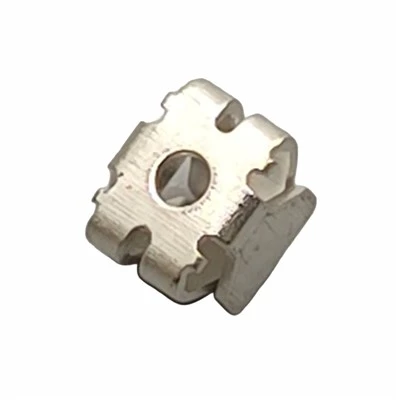
The big takeaway here is that there’s no “better” connector overall—just better for your specific needs. If you’re weighing ZIF vs non-ZIF FPC connectors, start with three questions: 1) Will you ever need to open/connect/disconnect this FPC after assembly? 2) How much space and clearance do you have around the connector? 3) What’s your volume and assembly setup? Those three questions will point you right to the right choice.
Automotive Connector As a FPC connector supplier, I’ve got lines of both ZIF and non-ZIF connectors, from fine-pitch high-speed ones for drones to ultra-compact non-ZIF for tiny wearables, so I can help you spec the right part for your project, no matter how big or small. If you’re working on a design, need samples, or just want to run numbers on BOM costs, hit me up to connect and chat through your exact needs. No sales pitch, no pushy hard sell, just straight talk about what will work for your product.
References
- “Flexible Printed Circuit (FPC) Connector Design Guide”, IPC Association Connecting Electronics Industries, 2022.
- “ZIF vs. Non-ZIF FPC Connector Performance Analysis”, Electronic Components Industry Association (ECIA), 2021.
- “Cost and Reliability Tradeoffs in FPC Connector Selection”, Journal of Microelectronics and Electronic Packaging, Vol. 18, No. 2, 2020.
- “High-Speed FPC Connector Signal Integrity Testing”, IEEE Transactions on Components, Packaging, and Manufacturing Technology, Vol. 11, No. 7, 2021.
Wenzhou JKUN Connector Co., Ltd.
As one of the most professional fpc connector manufacturers and suppliers in China, we’re featured by quality products and low price. Please rest assured to wholesale bulk customized fpc connector from our factory. For quotation and free sample, contact us now.
Address: No.2667, Ningkang East Road, Yueqing City, Zhejiang Province, China
E-mail: sales@cnjkun.com
WebSite: https://www.jkunjcj.com/
