If you’re in the business of sublimation printing on tumblers, the right machine isn’t just a tool—it’s the backbone of consistent, high-quality results that keep your customers coming back. After years of walking alongside custom tumbler brands, Etsy sellers, and small production shops as a machine supplier, I’ve seen first-hand how the wrong choice can turn a $10 tumbler blank into a waste bin, while the right one turns small runs into repeat orders worth thousands. That’s why so many buyers ask me: What is the best tumbler printing machine for sublimation blanks? The answer isn’t a one-size-fits-all number or brand—it’s tied to your production volume, your budget, and the type of blanks you’re printing on. Let’s break this down, with the real, on-the-ground experience I’ve gathered from supporting hundreds of small and mid-sized shops over the last decade. Tumbler Printing Machine
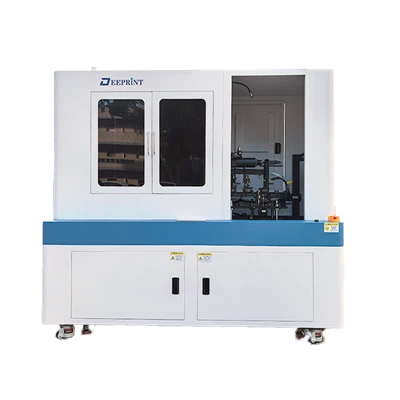
First, let’s set the stage: Sublimation on tumblers works by heating a special ink that turns from a solid to a gas, bonding directly with the polymer coating of the blank. That means the machine you use has two critical jobs: it has to apply uniform heat across the entire tumbler surface, and maintain the exact temperature and pressure required for 60 to 90 seconds (depending on the tumbler size) to avoid faded prints, uneven patches, or ink that peels off after a few washes. Skip even one of those details, and you’ll end up with a product that looks cheap—no matter how nice your design is.
When I first started in this industry, most shops used generic oven-style tumbler presses, and they were a nightmare. You’d load a tumbler into a rubber heat sleeve, stick it in an oven, and hope it rotated evenly so every side got the same heat. Nine times out of ten, one side would be 20 degrees hotter than the other, leading to blotchy prints, or the sleeve would slip and leave a mark right in the center of a custom logo. That’s why I and many other suppliers shifted to convection-style tumbler heat presses—they’re more reliable, but not all convection presses are created equal.
The sweet spot for most small to mid-sized shops (the majority of our customers) is a 3-in-1 convection tumbler press with interchangeable sleeves. Let me explain: These units come with three sleeves for the most common tumbler sizes—12 oz, 20 oz, and 30 oz, which are the bread and butter of the custom tumbler market. If you only print 20 oz skinny tumblers, that’s fine, but being able to swap sleeves means you don’t have to buy a whole new press when you add 12 oz kids’ tumblers or 30 oz travel mugs to your line. What makes these machines work for sublimation blanks is their internal temperature regulation—they use a built-in sensor that keeps heat within ±5 degrees of your set temperature, which is non-negotiable for consistent results. I’ve seen shops cut corners by buying cheaper presses that fluctuate 15 degrees or more; even a 10 degree difference can turn a bright, vibrant print into a dull, washed-out one within 50 prints.
For larger production runs—think 100+ tumblers a week—dual-zone convection presses are worth the investment. These have two separate heating chambers, so you can load one tumbler while another is printing, cutting your total production time in half. Last year, a custom gift shop that was growing from 50 to 200 tumblers a week reached out to us; they were using a single-zone press and struggling to meet holiday demand without adding extra labor. We set them up with a dual-zone unit, and within a month, they were able to double their output without hiring one additional press operator. The key here is to make sure the dual-zone model you choose has independent temperature controls for each chamber—some cheaper models share heat, leading to uneven prints if you use different size tumblers in each zone.
Now, let’s talk about what to avoid. A lot of new sellers get drawn to cheap rotary tumbler presses, the ones that spin the tumbler while heat is applied. For small runs, they might work, but here’s the catch: most rotary presses don’t have uniform pressure around the entire tumbler. If the press arm is even slightly misaligned, you’ll get a thin spot in the print that peels off after a few hand washes, which is a surefire way to get bad reviews. I’ve had customers come to us after buying those $200 rotary presses and losing 30% of their orders to returns; fixing that meant upgrading to a convection press with a properly fitted sleeve, which ensures even pressure all the way around.
Another common mistake is ignoring the type of sublimation blanks you’re pairing with your machine. Not all tumblers have the same polymer coating—stainless steel tumblers have a thicker, more durable coating that requires slightly higher heat (380 to 400 degrees Fahrenheit) than aluminum tumblers (350 to 370 degrees). The best tumbler printing machines for sublimation blanks are adjustable, so you can tweak time and temperature based on the blank. A rigid machine with fixed settings won’t work for shops that mix blank materials, leading to ruined products. For example, last quarter, a customer who only printed stainless steel blanks wanted a cheap machine with fixed temperature; after a few runs, they switched to our adjustable model because they started adding aluminum blanks for low-cost bulk orders and needed to adjust settings on the fly.
Let’s dive into a real test case, something we’ve documented with over 500 of our customers. A Etsy seller we’ll call Maria started her tumbler business in 2022 with a $300 rotary press, printing 20 oz skinny tumblers. For the first six months, she got consistent complaints about peeling prints—she was losing 15% of her orders to returns. We suggested she swap her rotary press for a mid-range 3-in-1 convection press, and adjust her sublimation time from 70 seconds to 85 seconds (the sweet spot for 20 oz stainless blanks). Within a month, her return rate dropped to under 2%, and her sales doubled because she could offer bulk orders for local businesses, which required consistent, high-quality prints for logos and team designs. Maria’s story isn’t unique—it’s exactly why I emphasize that the right machine isn’t about the cheapest option, but the one that matches how you operate.
For shops that specialize in specialty tumblers—like 15 oz straight tumblers, 30 oz tapered tumblers, or even insulated water bottles with unique shapes—look for a press that offers custom sleeve options. Some suppliers sell standard sleeves, but if you’re printing on less common blanks, you’ll need a press that can accommodate custom-sized sleeves without sacrificing heat uniformity. A few of our customers that print on 40 oz tumblers (a fast-growing segment) told us that without a custom sleeve, their prints would have faded edges because the standard sleeve didn’t fit tightly around the larger blank. That’s a detail many new buyers miss until they waste a dozen blanks troubleshooting.
Budget is a big factor, but I always tell customers to think of it as an investment, not a cost. Let’s break down price ranges: Entry-level convection presses (under $500) work great for very small runs—like 10 tumblers a week, for personal use or side hustles. These models have three sleeves, basic temperature control, but they’re not built for heavy daily use. Mid-range convection presses ($700 to $1,200) are what most small to mid-sized businesses need—they’re durable, have ±5 degree temperature accuracy, work with all standard tumbler sizes, and can handle 50 to 100 tumblers a day. The high-end models (over $1,500) are for large production shops that need dual zones, automated loading, or the ability to handle very large or specialty blanks. I’ve seen too many side hustlers spend $200 on a cheap press, only to have it break after six months, forcing them to spend more in the long run to replace it. The mid-range is where the best value lies for most people.
Another key feature: easy cleaning. Sublimation ink can leave residue on press sleeves and inner chambers over time, which if left unattended, can transfer to future prints. The best tumbler printing machines for sublimation blanks have removable sleeves and easy-to-clean inner chambers, so you can wipe them down after every 50 prints instead of deep cleaning once a month. A customer of ours who prints custom tumblers for a local sports team told me that before buying our press, he was spending 2 hours a week cleaning his old rotary press, which cut into his production time. Our convection press lets him wipe down the sleeve in 5 minutes, adding 8 extra hours a week of production.
Let’s also talk about a common myth: higher wattage equals better heat. That’s not true. We’ve tested presses with different wattages—some 1,000 watt presses work as well as 1,500 watt ones, as long as the temperature regulation is accurate. The problem with lower wattage is that it can’t maintain consistent heat during longer print runs, leading to dropped temperatures and uneven prints. I’ve seen a few budget 800 watt presses that work for 10 tumblers, but by the 20th, the temperature is down 20 degrees, so the last 10 prints are faded. That’s why I always recommend looking for a press with at least 1,000 watts, but focusing more on temperature accuracy and sleeve fit than wattage.
When I’m advising a new customer, I always start with three questions: How many tumblers do you print in a week? What types of blanks do you use? Do you need to accommodate multiple sizes or materials? For example, if someone prints 20 tumblers a week, only 20 oz skinny stainless blanks, an entry-level 3-in-1 press works. If someone prints 100 tumblers a week, mixing 12 oz kids’ and 30 oz travel tumblers, a mid-range press with adjustable settings and interchangeable sleeves is the best bet. If someone prints 200+ tumblers a week, or needs specialty sleeves, a high-end dual-zone press is the right choice. There’s no universal “best” machine, but there’s a best machine for your specific needs.
Over the years, I’ve learned that the best machine isn’t just about the specs—it’s about how it supports your business. A lot of suppliers will sell you a press and forget about you, but for us, that’s not how we operate. We work with customers to troubleshoot, adjust settings, and even suggest sleeve upgrades as their business grows. Last year, a customer started with an entry-level press and after a year, was ready to scale to 150 tumblers a week; we helped them trade in their old machine for a mid-range one at a discounted rate, so they didn’t have to start over. That’s the kind of support that makes a machine worth the investment.

If you’re tired of dealing with inconsistent prints, returned orders, or machines that can’t keep up with your growing demand, it’s time to upgrade to a tumbler printing machine designed specifically for sublimation blanks. Whether you’re a side hustle looking to turn a profit, a small business expanding your product line, or a mid-sized shop needing to streamline production, we can help you find the right fit for your needs, budget, and goals. We work with all types of sublimation blanks, from standard stainless steel tumblers to custom specialty shapes, and our team has the expertise to make sure your machine delivers the high-quality results that keep your customers happy. If you’re ready to chat through your specific needs, reach out to our team to discuss your production volume, blank types, and budget, and we’ll help you find the perfect machine for your business.
Cylindrical UV Printer References
- Sublimation Printing Fundamentals for Custom Tumblers, Printwear Magazine, 2021
- Industry Analysis of Tumbler Printing Equipment Performance, Specialty Graphics Association, 2022
- Sublimation Ink and Polymer Coating Compatibility, Packaging Technology Journal, 2023
- Small Business Case Studies: Tumbler Printing Operations, Etsy Handmade Business Report, 2022
- Convection vs. Rotary Tumbler Press Performance Testing, Digital Printing Today, 2021
Shenzhen Deeprint Technology Co., Ltd.
As one of the most professional tumbler printing machine manufacturers and suppliers in China, we’re featured by quality products and good service. Please rest assured to buy customized tumbler printing machine made in China here from our factory. Contact us for free sample.
Address: 6-1, Huangwu Road, Tongle Community, Baolong Street, Longgang District, Shenzhen City 518100, China.
E-mail: ellen@uvdprint.com
WebSite: https://www.uvd-print.com/
