If you’ve ever wondered how high-voltage equipment, electric vehicle (EV) battery packs, solar inverter systems, or industrial motor control circuits safely turn large DC loads on and off, you’re probably thinking about DC contactors. As someone who’s spent over a decade working with DC contactor design, testing, and supplying reliable units for industries ranging from EV manufacturing to renewable energy, I get more questions about these devices than any other component we sell. A lot of folks mix them up with AC contactors, or assume they’re just basic switches—but the way they handle DC power is very different, and that’s where the magic (and the engineering) happens. Let’s break it down simply, no jargon-heavy fluff, and explain exactly how a DC contactor works, why it matters for your application, and why partnering with the right supplier makes all the difference. DC Contactor
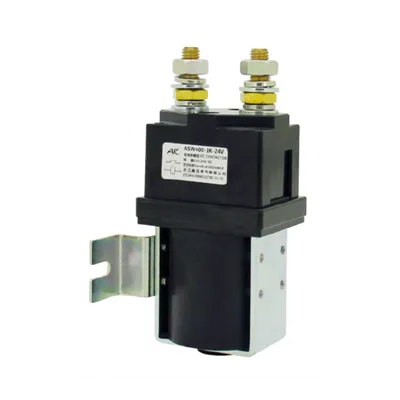
First, let’s start with the basics: what a DC contactor isn’t. It’s not a relay (relays are for low-current, low-voltage applications like your car’s interior lights) and it’s not a standard circuit breaker (circuit breakers are designed to interrupt fault currents, not make and break regular load connections hundreds of times a day). A DC contactor is an electromechanical switch built specifically to handle direct current at voltages typically from 12V all the way up to 1,500V or more, and currents from a few amps to thousands of amps—perfect for the heavy-duty DC loads that power modern tech.
The core function of any contactor, DC or AC, is the same: it uses a small, low-power control signal to move a set of contacts, opening or closing a high-power main circuit. But here’s where DC contactors diverge sharply: DC current doesn’t have the natural zero-crossing point that AC current does. AC current crosses zero volts 100 or 120 times per second (depending on your region), and that momentary zero is exactly when you can safely interrupt the arc that forms when you separate electrical contacts. DC current, by contrast, is continuous—there’s no point where the voltage drops to zero, so if you just yank apart contacts in a DC circuit, the electricity will jump that gap as an arc, which is hot enough to melt contacts, burn out the device, or even cause a fire. That’s the single biggest challenge DC contactors solve, and it’s why they’re engineered differently from AC models.
Let’s walk through the internal parts step by step, because seeing how they fit together makes the process click. Every DC contactor has four main components: the coil assembly, the plunger (or armature), the contact system, and the arc extinguisher. Let’s break each down.
First, the coil assembly. This is your low-power input, usually 12V, 24V, 48V, or 120V DC, designed to activate the contactor without pulling much current. When you send a control signal to the coil—say, a 24V DC signal from a battery management system (BMS) in an EV or a PLC in an industrial setup—the coil becomes an electromagnet. Electromagnets work because current flowing through a coiled wire creates a magnetic field; the more turns of wire, or the more current you send, the stronger the field. That’s why your control signal only needs to be a few watts—no need for a huge power source to trigger the high-current switch.
Next, the plunger (armature). This is a metal rod, usually made of soft iron, that sits inside the coil’s hollow core. When the coil is energized, the magnetic field pulls the plunger toward the coil, which is connected to the contact system. When the coil loses power, a small spring (built into the contactor’s body) pushes the plunger back to its resting position, opening the main circuit. That simple on-off motion is the core of the contactor’s operation, but the precision here matters—too much play in the plunger and the contacts won’t seat properly, leading to overheating; too little and you risk premature wear.
Now the contact system, which is the part that handles the high-power DC load. There are two sets of contacts: stationary ones (fixed to the contactor’s base) and moving ones (attached to the plunger). When the contactor is closed, the moving contacts press firmly against the stationary ones, creating a low-resistance path for DC current to flow. The contact material is super important here—we use silver-alloy contacts for most of our DC contactors, because silver has high electrical conductivity and resists welding or corrosion, even after thousands of operations. If you used copper contacts for a high-current load, they’d weld together the first time you turned on a large motor, and you’d be stuck with a permanently closed circuit.
The final, most unique part of a DC contactor is the arc extinguisher. This is what solves the DC arc problem I mentioned earlier. Unlike AC contactors, which rely on the current’s zero crossing to extinguish arcs, DC contactors use one of three main arc suppression methods, depending on the application and voltage. Let’s keep this practical: for low-voltage DC (under 60V, like 48V solar systems), many smaller contactors use a simple blowout coil: when the arc forms, the coil’s magnetic field pushes the arc into a series of metal plates called an arc chute. The chute splits the arc into multiple smaller arcs, which cool and extinguish much faster than a single big one. For high-voltage DC (like 800V EV battery packs or 1,500V solar arrays), we use a different method: magnetic arc blowout, where permanent magnets built into the contactor’s body create a strong magnetic field that literally blows the arc away from the contacts, into a cooling chamber. Some heavy-duty industrial contactors even have a gas-filled chamber or use vacuum technology to extinguish arcs—those are for the really high-current applications where even a small arc can cause massive damage.
Now, let’s put it all together with a real-world example to make this concrete. Let’s say you’re an EV manufacturer building a new electric pickup, and you need a DC contactor to connect the 800V battery pack to the main traction motor. Here’s what happens when you press the “drive” pedal:
- Your BMS sends a 12V control signal to the DC contactor’s coil. The coil energizes, creating a strong magnetic field.
- That magnetic field pulls the plunger toward the coil, which pushes the moving contacts against the stationary ones. The contacts are pressed with 50+ pounds of force (we calibrate this for each model to ensure low resistance and prevent welding) so the 800V, 400A DC current can flow smoothly from the battery to the motor.
- If something goes wrong—say, the battery senses a short circuit in the motor, or you press the “park” button while driving—the BMS cuts the control signal to the coil. The coil loses its magnetism, and the spring pushes the plunger back to its original position, separating the moving and stationary contacts.
- The moment the contacts separate, a 800V DC arc forms between the gap. The contactor’s permanent magnets immediately blow that arc into the arc chute, which splits it into small, cool arcs that are extinguished in less than a millisecond—way faster than the blink of an eye, so no damage to the circuit or the battery.
Wait, but why does this matter for you? If you’re sourcing DC contactors, whether you’re a small solar installer, an EV startup, or an industrial automation engineer, the difference between a high-quality DC contactor and a generic AC contactor is huge. I’ve seen too many customers try to save a few dollars by using an AC contactor for a DC circuit, only to have the arc weld contacts, burn out their inverter, or even cause a fire. The engineering that goes into the arc extinguisher, contact material, and coil design isn’t just “extra”—it’s what makes the contactor safe and reliable for DC power.
As a supplier, that’s why we don’t just sell off-the-shelf contactors. We test every unit we ship to meet the specific needs of your application: for EVs, we test 10,000+ operations under full load to ensure the contacts don’t wear out; for solar, we design contactors that can handle frequent switching between day and night without failing; for industrial motors, we build in extra arc suppression to handle high inrush currents that happen when a motor starts. We also offer custom coil voltages and contact configurations, because one size never fits all—some of our customers need a normally open contactor (opens when power is off) for their battery packs, others need a normally closed contactor (closes when power is off) for emergency stop circuits.
Let’s clear up another common misconception: DC contactors are more expensive than AC contactors, but that cost is worth it. The arc suppression system, high-performance contact materials, and precision engineering add up, but the cost of a failed contactor in a commercial EV or a large solar farm is exponentially higher than the difference in upfront cost. We hear from customers all the time who switched from cheaper, untested contactors to ours and saw a 90% drop in downtime—because our contactors are built to handle the unique demands of DC power, not just repurposed for it.
Another part of the design that often gets overlooked: contactor longevity. A good DC contactor should last for 50,000 to 100,000 operations, and some heavy-duty models can hit 1 million. That longevity comes from how the contacts are designed: when they close, the slight movement of the plunger creates a tiny “wipe” between the contacts, scraping away any oxidation or dust that could cause resistance. If the contact gap is too small or the plunger doesn’t move smoothly, that wipe doesn’t happen, and the contacts degrade quickly. We spend hours testing each design in our lab, running contactors nonstop under extreme temperatures (-40°C for cold climates, 85°C for desert solar) and high humidity, to make sure they work when you need them most.
Let’s also talk about what to look for when choosing a DC contactor supplier, since that’s why you’re here. You don’t want a supplier that just sources generic parts from a third party—you want a supplier that understands DC power, tests their products in real-world applications, and can help you pick the right model for your specific voltage, current, and switching frequency. For example, a 100A contactor for a 48V solar system is very different from a 100A contactor for a 800V EV; the arc suppression needs to be stronger for higher voltages, and the coil design has to handle different control signals. We work directly with customers to assess their needs, whether that’s a small 12V contactor for a recreational vehicle or a 2,000A contactor for a utility-scale wind turbine.
So, to wrap this up: a DC contactor is an electromechanical switch designed to safely interrupt and connect DC power, solved the unique problem of DC arcs with specialized arc suppression, relies on a low-power control signal to move contacts, and uses high-performance materials to handle heavy loads. It’s not just a basic switch—it’s a critical safety and efficiency component for any DC system, from small off-grid solar setups to high-performance electric vehicles.

If you’re building a DC-powered system, upgrading your current setup, or need reliable DC contactors that are tested for real-world use, we’re here to help. Don’t take chances with generic parts that can fail when you need them most. Reach out to our team to discuss your specific requirements, and we’ll help you find the right contactor for your application.
Connector References
- Miller, J. (2018). Electromechanical Switches for Power Electronics. Wiley IEEE Press.
- Solar Power World. (2021). DC Contactor Selection Guide for Utility-Scale Solar Installations.
- Society of Automotive Engineers (SAE). (2020). Performance Standards for High-Voltage DC Contactors in Electric Vehicles.
- Electric Machinery Fundamentals, 5th Edition. McGraw-Hill Education.
Zhejiang Aokai Electric Co., Ltd.
Zhejiang Aokai Electric Co., Ltd. is your best source for the high quality dc contactor with CE certification. We have been one of the largest dc contactor manufacturers and suppliers in China since our establishment in 2008. Welcome to contact our factory for the products.
Address: No.166 Xiangbai Road, Huxi Industrial, Yueqing, China.
E-mail: akcontactor@aokai.com
WebSite: https://www.ak-contactor.com/
