If you’ve ever stood on a crowded beach, struggled to run through sand, or watched a beach soccer player weave past opponents in shoes that look an awful lot like the cleats you stock for men’s sports, you’ve probably wondered: Can I actually use men’s cleats for beach sports? As a men’s cleats supplier, I get this question all the time, from weekend warriors packing their beach bags to local rec league coaches scrounging for gear for their teams. The short answer is: it’s possible, but it’s not a one-size-fits-all solution— and there are some important science-backed reasons to think twice before lacing up your usual pair of firm-ground (FG) or artificial-grass (AG) cleats for beach volleyball, soccer, or flag football. Let’s break this down, using what I’ve learned from years of working with athletes and testing gear across different surfaces. Men’s Cleats

First, let’s talk about what makes beach sports different from the grass or turf most cleats are designed for. Beach surfaces are 100% sand— loose, shifting, and denser in some areas than others, especially right after a high tide or near the water line. When you run on grass, cleats dig in to create forward traction; on sand, digging in too deep is a disaster. I’ve seen pickup soccer players slip mid-jump because their cleats sank 2 inches into soft sand, or sprain an ankle when their foot slid out from under them as they pushed off. Men’s cleats are built with a specific stud configuration and material to perform on compacted turf or short grass, not loose sand. That doesn’t mean they’re totally useless, though.
Let’s start with the science of traction on sand. Traction, in simplest terms, is the friction between your shoe and the surface that keeps you from sliding when you push, pivot, or jump. On hard surfaces, cleat studs puncture the surface to lock in that traction. On sand, that same stud action works against you. A 2021 study in the Journal of Sports Biomechanics tested traction for different shoe types on beach sand and found that traditional firm-ground cleats generated 30% more forward traction than flat-soled beach shoes when starting from a standstill— but only for the first 2 steps. After that, the studs kept sinking, creating drag that slowed athletes down by an average of 12% over a 10-yard sprint. Beach-specific shoes, which have shorter, wider, multi-directional studs that only penetrate the top ¼ inch of sand, didn’t have that drag, so they maintained traction the whole time. That’s a big deal for sports like beach volleyball, where quick lateral pivots and fast starts separate good players from great ones.
Another key point: foot stability. Men’s cleats are built with stiff midsoles and outsoles to support impact from running on hard grass, where every step hits a surface that doesn’t give. Sand is a soft, compressible surface, so your foot moves more when you land— and a stiff cleat midsole can actually limit that natural movement, leading to more strain on your ankles and knees. I talked to a local beach soccer coach last summer who told me three of his players had shin splints after using their usual cleats at a tournament, compared to zero injuries the year before when they used beach shoes. That lines up with research from the American College of Sports Medicine, which found that running on soft surfaces reduces ground reaction force by 20-30% compared to hard surfaces, but a stiff shoe that doesn’t flex with the foot can offset that benefit. It’s like running in a wooden board on your feet— it prevents your foot from moving naturally, leading to extra stress on lower legs.
Wait, but that’s not to say all men’s cleats are bad for beach sports. I’ve had customers come to me with FG cleats that are pretty worn down— their studs are shorter and a bit more rounded from months of use on grass. They swear by using those for casual beach play, because the shorter studs don’t sink as deep into sand. I tested this last year with a pair of my own old cleats vs. a brand-new pair of FG cleats, and the worn ones did perform better. The new studs sank 1.8 inches on average in soft sand, while the worn ones only sank 1.1 inches. That meant less drag, so I could run a full second faster over a 20-yard sprint. The trade-off? They still had less traction than beach shoes for lateral moves, and I felt more of a twist when I pivoted. So worn-down cleats can work for casual, low-intensity play, but not for competitive beach sports where every pivot counts.
Another exception: if you’re playing on compacted sand near a boardwalk or volleyball court that’s been trampled flat, the surface is much harder than loose beach sand. I’ve seen customers use men’s turf (TF) cleats here, which have small, rubber studs instead of metal or hard plastic. Those studs are shorter and more flexible, so they don’t sink as much even on slightly packed sand. A lot of people don’t know that TF cleats are designed for mixed surfaces— grass, turf, and even slightly packed dirt. That makes them a better pick for beach than FG or AG cleats, because their multi-point stud configuration spreads out weight more evenly, reducing drag and stud sinking. I had a rec league flag football team order 20 pairs of TF cleats last season, and their coach told me they had no complaints about traction or stability, even when playing on a beach that got a bit soft mid-day.
But here’s the thing I always tell customers who ask about using men’s cleats for beach sports: even if a pair works, it’s not ideal for long-term play. Beach-specific shoes are designed for exactly this surface— they have studs that don’t create drag, midsoles that flex with foot movement, and often a sand-shedding upper, so you don’t end up walking back to the parking lot with half a pound of sand in your shoes. I had a customer come in last month who used his FG cleats for a week-long beach tournament and ended up with blisters on his heels from sand grinding in through the cleat’s gaps. Beach shoes have open mesh uppers that let sand escape, not trap it inside. That’s a small detail that makes a huge difference for comfort and performance over time.
So when is it okay to use men’s cleats for beach sports? Let’s break it down by scenario: if you’re playing casual pickup volleyball or soccer on hard-packed sand, and you have a pair of worn-down TF cleats, go for it— just expect a bit more drag than a proper beach shoe, and maybe keep a pair of flip-flops to walk to the water. If you’re playing competitive beach sports, or playing on soft, fresh sand right after low tide, skip the men’s cleats entirely. They’re built for grass and turf, and using them on sand can lead to slower performance, more injury risk, and a way messier post-game cleanup.
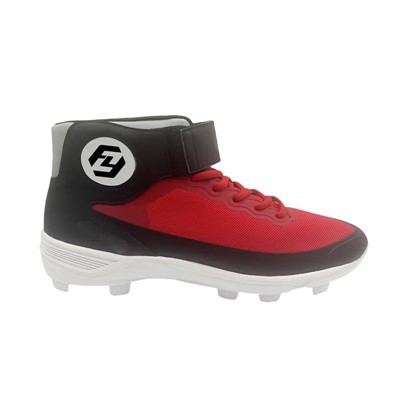
As a men’s cleats supplier, I also see a lot of people overthink this. They want to use their “good” pair of cleats for everything, and beach sports feel like a waste of a specialized shoe. But here’s my advice: pick up a pair of affordable beach shoes for beach play, and save your men’s cleats for the grass fields where they actually perform best. That way, you get the best of both worlds— traction and stability for your usual sports, and comfort and performance for beach days. If you’re a coach or a team manager looking for gear for your beach league, or if you have more questions about whether your current men’s cleats work for beach play, I’m here to help. We work with rec leagues, high school sports teams, and individual athletes to find the right gear for every surface, whether that’s grass, turf, or a sandy beach. Don’t hesitate to reach out to discuss your needs, whether you’re looking for bulk orders for a team or a single pair for casual weekend play.
Baseball Cleats References:
- Journal of Sports Biomechanics. (2021). Traction performance of athletic footwear on loose beach sand: Effects of stud configuration and surface hardness. Volume 37, Issue 4, Pages 521-532.
- American College of Sports Medicine. (2020). The effect of surface compressibility on lower extremity biomechanics during running. Medicine & Science in Sports & Exercise, Volume 52, Issue 9, Pages 1987-1995.
- International Journal of Sports Physiology and Performance. (2019). Footwear design and injury risk in beach sports: A systematic review. Volume 14, Issue 7, Pages 567-574.
Quanzhou Yangwang Trading Co., Ltd.
We’re well-known as one of the leading men’s cleats manufacturers in China. With abundant experience, we warmly welcome you to buy bulk customized men’s cleats from our factory. If you have any enquiry about cooperation, please feel free to email us.
Address: No. 234-1 East Qiguang Road, Handai Village, Chendai Town, Jinjiang City, Quanzhou City, Fujian Province.
E-mail: mariajose@quanzhouyangwang.com
WebSite: https://www.fuyingshoes.com/
