When you’re driving down a highway or idling at a stoplight, you probably don’t think twice about the dozen or so engine parts working quietly under the hood. But ask any engine parts supplier, and they’ll tell you the water pump is one of the unsung heroes of that setup. I’ve spent the last 12 years sourcing, testing, and distributing engine components, and I’ve lost count of how many times a shop owner has called me at 7 a.m. because their truck’s engine overheated, and turning the part over revealed a failed water pump. It’s not the most flashy part—no one brags about upgrading their water pump at car meets—but without it, your engine is just a block of metal sitting on top of a cylinder, generating heat faster than it can escape. Engine Parts

Let’s start with the basics, because understanding what a water pump does requires breaking down why engines need cooling in the first place. When fuel ignites inside an engine’s cylinders, temperatures can spike to over 2,000 degrees Fahrenheit. All that heat is necessary to create the energy that moves your car, but if it’s left uncontrolled, it will warp cylinder heads, seize pistons, and turn a $3,000 engine into a paperweight. That’s where the engine cooling system comes in. It’s a closed loop: a radiator sits at the front of the car, behind the grille; hoses connect it to the engine block and the cylinder head; and a mix of coolant (usually a 50/50 blend of water and ethylene glycol) flows through those passages to absorb heat. The water pump is the part that makes that flow happen. Think of it as the heart of the cooling system—pushing the coolant through the loop so it never just sits there, turning hot and stagnant.
The science of how a water pump works is surprisingly straightforward, even if the design has shifted a bit over the years. Most passenger vehicles and light trucks use a centrifugal water pump, which is bolted to the front of the engine block and driven by a belt connected to the crankshaft. When the engine runs, the crankshaft turns that belt, which spins a pulley attached to the water pump’s shaft. That shaft connects to a impeller—curved, fan-like blades inside a housing. As the impeller spins, it flings coolant outward from the center of the housing, creating low pressure at the inlet where the coolant enters. That pressure difference pulls more coolant in, and the centrifugal force pushes the heated coolant out to the radiator. The radiator’s fins then dissipate that heat into the air, and the now-cooled coolant flows back to the engine to repeat the cycle. It’s a simple loop, but every part has to align perfectly: if the impeller is misaligned by even a millimeter, flow drops by 20% or more, and the engine overheats within minutes.
Now, you might be wondering: why not just let the air cool the engine directly? Older engines, especially early cars from the 1920s and 1930s, did use air cooling, usually with fins cast into the cylinder heads and a fan mounted on the crankshaft. But that system has major flaws. It works great when you’re moving fast, because the air flows freely over the fins, but at idle or in stop-and-go traffic, there’s not enough air movement to carry away heat. That’s why air-cooled engines (think old Volkswagen Beetles) often would overheat if you sat in traffic for too long, and they struggled in hot climates. Liquid cooling, made possible by the water pump, solves that problem entirely. The pump keeps coolant circulating constantly, even when the engine isn’t moving, so heat is pulled away consistently, no matter the speed or temperature outside. That’s a huge reason modern engines can run at higher efficiencies and produce more power without the risk of overheating.
As an engine parts supplier, I’ve seen firsthand how much the water pump’s role has evolved beyond just “moving coolant.” A lot of newer water pumps now integrate extra features to make the cooling system more precise. For example, many have a thermal bypass valve that slows the flow of coolant when the engine is cold. When you start a cold engine, metal parts expand, and friction is higher—warm-up time is where most engine wear happens. By limiting coolant flow when it’s cold, the engine reaches its optimal operating temperature faster, reducing wear and improving fuel efficiency. Some water pumps also have electronic controls, instead of being driven directly by the crankshaft. That means they can adjust their speed based on engine temperature, load, and vehicle speed, instead of spinning at a fixed rate tied to the engine’s RPM. It’s a small change, but it cuts down on unnecessary energy use—if the engine is cool, the pump doesn’t have to work as hard, which saves fuel and reduces load on the engine itself.
I can’t talk about the water pump’s role without talking about what happens when it fails, because that’s where its importance becomes impossible to miss. A water pump doesn’t just stop working out of nowhere—usually, there are warning signs, and as a supplier, we see the same failure patterns over and over. The most common issue is a worn bearing or seal. The pump’s shaft spins thousands of times per minute, and the bearing that supports it degrades over time, leading to wobbling or noise (that high-pitched whine coming from the front of the engine). When the seal fails, coolant leaks out—you might see a puddle under your car, or steam coming from the engine bay. If you ignore those signs, the impeller can come loose, or the pump can seize up. Seized water pumps are a nightmare: the belt driving the pump snaps, which means no coolant flow, and the engine can overheat in 10 minutes or less. I remember a customer who called me last year, his 18-wheeler had seized up on the interstate, and when we towed it in, the water pump’s impeller had broken off, and the cylinder head was warped so bad it needed a full replacement. That $50 water pump part ended up costing him over $3,000 in repairs.
That’s why, as an engine parts supplier, I always tell customers not to wait for a failure to replace their water pump. Most manufacturers recommend replacing the water pump every 60,000 to 100,000 miles, right around the same time as the timing belt or serpentine belt. If you’re already pulling the timing belt to replace it, swapping the water pump at the same time saves labor—you don’t have to take the engine apart twice. It’s a small investment that prevents a huge headache down the line. We test every water pump we stock to make sure they meet OEM specifications, because a cheap, low-quality pump won’t have the right impeller design or bearing strength, and it will fail sooner. For a trucking company with a fleet of 20 rigs, that adds up to thousands in unnecessary repairs if you cut corners on water pumps.
Another thing people don’t realize is that the water pump’s role ties into other engine parts too. It works with the thermostat, which controls when coolant flows to the radiator. The thermostat stays closed when the engine is cold, so coolant circulates only inside the engine block, helping it warm up fast. Once the engine hits 195 to 220 degrees Fahrenheit, the thermostat opens, and the water pump sends heated coolant to the radiator. If the water pump isn’t moving enough coolant, the thermostat can’t regulate temperature properly, so even a good thermostat will lead to overheating. The water pump also works with the radiator, hoses, and the cooling fan—all of these parts are a system, and one weak link breaks the whole thing. That’s why when a customer comes to me with an overheating issue, I don’t just sell them a water pump; I walk them through checking all the related parts too. It’s not just about selling a part—it’s about making sure their engine runs reliably.
I’ve been in this business long enough to see trends in water pump design, too. Electric water pumps are becoming more common in hybrid and electric vehicles, as well as some high-performance gas engines. In hybrids, the engine often shuts off when you’re idling or moving at low speeds, so a mechanical pump would stop working, leading to overheating. An electric pump runs independently, so it can keep coolant flowing even when the engine is off. For high-performance engines, electric pumps let tuners adjust coolant flow for more aggressive driving, which is a big upgrade over mechanical pumps that are limited by engine RPM. Even with these new designs, though, the core role of the water pump stays the same: move coolant to keep the engine at the right temperature. It’s a part that’s adapted over time, but its job hasn’t changed in 100 years.
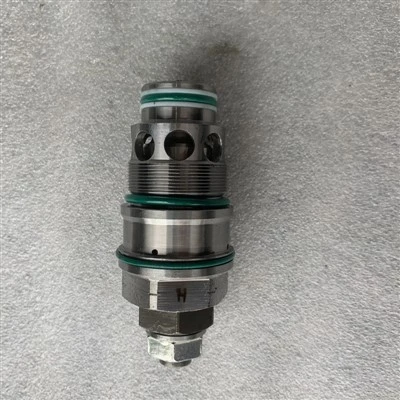
At the end of the day, the water pump is a perfect example of how engine parts work together to keep a car running. You don’t see it, you don’t think about it, but when it’s working, you never have to worry about it. When it fails, it brings everything to a halt. If you’re a mechanic, a fleet manager, or a car owner looking for reliable engine parts, we stock water pumps for passenger cars, trucks, heavy-duty equipment, and more—all tested to meet high standards, with competitive pricing and fast delivery. Don’t wait until your engine overheats to replace your water pump; reach out to our team to talk through your needs, whether you’re replacing a single part or outfitting an entire fleet. We’re here to help you keep your engines running strong, mile after mile.
Main Control Valve References:
- Internal Combustion Engine Fundamentals, John B. Heywood
- Automotive Cooling Systems: Design, Testing, and Maintenance, Society of Automotive Engineers (SAE)
- “Water Pump Failure Modes and Prevention Strategies,” Automotive Maintenance and Repair Association (AMRA)
Yantai Dayun Machinery Parts Co., Ltd.
As one of the most professional engine parts suppliers in China, we are committed to providing high quality products with low price. Please feel free to buy discount engine parts in stock here from our factory. Contact us for quotation and free sample.
Address: NO91, Zhenzhong Street, Fushan District, Yantai City
E-mail: dayunhyd5123@163.com
WebSite: https://www.dayunexcavator.com/
