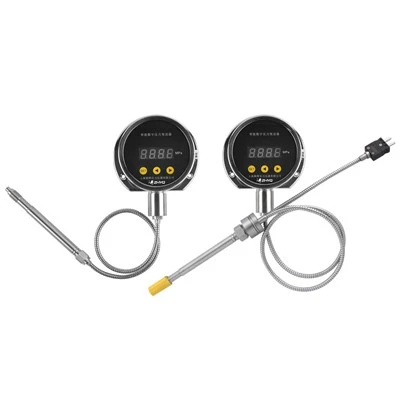
As a supplier of differential pressure transmitters, I’ve witnessed firsthand the crucial role these devices play in numerous industries. Differential pressure transmitters are used to measure the difference in pressure between two points in a system. This measurement is then converted into a signal that can be used to monitor and control various processes. In this blog, I’ll delve into the signal conversion process of a differential pressure transmitter, shedding light on the technical aspects and applications. Differential Pressure Transmitter
Understanding Differential Pressure
Before diving into the signal conversion process, it’s essential to understand what differential pressure is. Differential pressure (ΔP) is the difference in pressure between two points in a fluid system. It can be caused by a variety of factors, such as fluid flow, elevation changes, or the presence of restrictions in the flow path. Measuring differential pressure is vital in many industrial applications, including flow measurement, level measurement, and filter monitoring.
Components of a Differential Pressure Transmitter
A typical differential pressure transmitter consists of several key components:
- Sensing Element: This is the heart of the transmitter. It detects the differential pressure and converts it into a mechanical displacement. Common types of sensing elements include diaphragms, bellows, and capacitive sensors.
- Transducer: The transducer takes the mechanical displacement from the sensing element and converts it into an electrical signal. This signal is usually proportional to the differential pressure being measured.
- Signal Conditioning Circuit: The electrical signal from the transducer may need to be amplified, filtered, and linearized to ensure accurate and reliable measurement. The signal conditioning circuit performs these tasks.
- Output Stage: The final stage of the transmitter is responsible for converting the conditioned electrical signal into a standard output signal, such as a 4-20 mA current loop or a digital signal (e.g., HART, Modbus).
The Signal Conversion Process
The signal conversion process of a differential pressure transmitter can be broken down into the following steps:
- Pressure Sensing: The differential pressure is applied to the sensing element of the transmitter. The sensing element deforms in response to the pressure difference, creating a mechanical displacement. For example, in a diaphragm-based sensing element, the diaphragm will deflect towards the lower pressure side.
- Mechanical-to-Electrical Conversion: The mechanical displacement of the sensing element is then converted into an electrical signal by the transducer. Different types of transducers use various principles to achieve this conversion. For instance, a capacitive transducer measures the change in capacitance caused by the displacement of the diaphragm. As the diaphragm moves, the distance between two conductive plates changes, altering the capacitance value. This change in capacitance is then converted into an electrical voltage or current signal.
- Signal Conditioning: The electrical signal from the transducer is typically weak and may contain noise and non-linearities. The signal conditioning circuit amplifies the signal to a suitable level, filters out unwanted noise, and linearizes the signal to ensure that the output is a linear function of the differential pressure. This step is crucial for accurate and reliable measurement.
- Output Signal Generation: Once the signal has been conditioned, the output stage converts it into a standard output signal. The most common output signal for differential pressure transmitters is a 4-20 mA current loop. In a 4-20 mA current loop, a current of 4 mA represents the lower end of the measurement range (e.g., zero differential pressure), while a current of 20 mA represents the upper end of the range (e.g., the maximum differential pressure that the transmitter can measure). This current signal is then transmitted to a control system or a monitoring device for further processing.
Digital Signal Conversion
In addition to analog output signals, many modern differential pressure transmitters also support digital communication protocols. Digital signal conversion offers several advantages over analog signals, including higher accuracy, better noise immunity, and the ability to transmit additional information.
- Analog-to-Digital Conversion (ADC): In a digital differential pressure transmitter, the conditioned analog signal from the transducer is first converted into a digital signal using an analog-to-digital converter (ADC). The ADC samples the analog signal at regular intervals and converts it into a binary number.
- Digital Signal Processing (DSP): The digital signal is then processed by a digital signal processor (DSP). The DSP performs various functions, such as calibration, linearization, and compensation for temperature and pressure changes. It can also store configuration parameters and diagnostic information.
- Digital Communication: Once the digital signal has been processed, it can be transmitted using a digital communication protocol. Common digital communication protocols for differential pressure transmitters include HART (Highway Addressable Remote Transducer), Modbus, and Profibus. These protocols allow the transmitter to communicate with a control system or a monitoring device, providing real-time data and enabling remote configuration and diagnostics.
Applications of Differential Pressure Transmitters
The signal conversion process of differential pressure transmitters makes them versatile devices that can be used in a wide range of applications:
- Flow Measurement: Differential pressure transmitters are commonly used to measure the flow rate of liquids and gases in pipes. By measuring the pressure drop across a flow element, such as an orifice plate or a Venturi tube, the flow rate can be calculated using the Bernoulli equation.
- Level Measurement: In a closed tank, the differential pressure between the bottom and the top of the tank is proportional to the level of the liquid inside the tank. Differential pressure transmitters can be used to measure this pressure difference and determine the liquid level.
- Filter Monitoring: Differential pressure transmitters can be used to monitor the condition of filters in a fluid system. As the filter becomes clogged, the pressure drop across the filter increases. By measuring this differential pressure, the filter can be replaced before it causes a significant reduction in flow rate.
- Process Control: In industrial processes, differential pressure transmitters are used to monitor and control various parameters, such as pressure, temperature, and flow rate. The output signal from the transmitter is sent to a control system, which can adjust the process variables to maintain optimal operating conditions.
Why Choose Our Differential Pressure Transmitters
At our company, we take pride in offering high-quality differential pressure transmitters that are designed to meet the needs of various industries. Here are some reasons why you should choose our products:
- Accuracy and Reliability: Our transmitters are engineered to provide accurate and reliable measurements, even in harsh environments. We use advanced sensing technology and signal processing algorithms to ensure high precision and stability.
- Wide Range of Options: We offer a wide range of differential pressure transmitters with different measurement ranges, output signals, and communication protocols. This allows you to choose the transmitter that best suits your specific application.
- Customization: We understand that every application is unique. That’s why we offer customization services to meet your specific requirements. Whether you need a special housing, a particular output signal, or a custom calibration, we can work with you to develop a solution that meets your needs.
- Excellent Customer Support: Our team of experienced engineers and technicians is dedicated to providing excellent customer support. We offer technical assistance, training, and after-sales service to ensure that you get the most out of our products.
Contact Us for Procurement and Discussions
If you’re looking for a reliable differential pressure transmitter supplier, we’d love to hear from you. Our products are designed to provide accurate and reliable measurements in a wide range of applications. Whether you’re in the oil and gas industry, the chemical industry, or any other industry that requires differential pressure measurement, we have the solution for you.
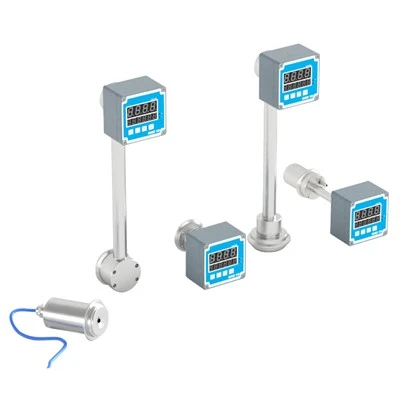
Inline Concentration Meter Contact us today to discuss your specific requirements and learn more about our differential pressure transmitters. Our team of experts will be happy to assist you in finding the right product for your application. Let’s work together to ensure the success of your projects!
References
- Doebelin, E.O. (2007). Measurement Systems: Application and Design. McGraw-Hill.
- Bonfiglioli, R. (2017). Instrumentation and Process Control. CRC Press.
- O’Hanlon, J.F. (2014). A Users Guide to Instrumentation and Controls. ISA – The Instrumentation, Systems, and Automation Society.
Shanghai Zhaohui Pressure Apparatus Co., Ltd.
Shanghai Zhaohui Pressure Apparatus Co., Ltd. is one of the most professional differential pressure transmitter manufacturers and suppliers in China, featured by quality products and good service. Please rest assured to wholesale advanced differential pressure transmitter in stock here from our factory. Also, customized service and 1 year warranty are available.
Address: 2-6/F, Building 8, No.115, Lane 1276, Nanle Road, Shanghai, China
E-mail: sales@zhyqsensor.com
WebSite: https://www.sinosensor.net/
